
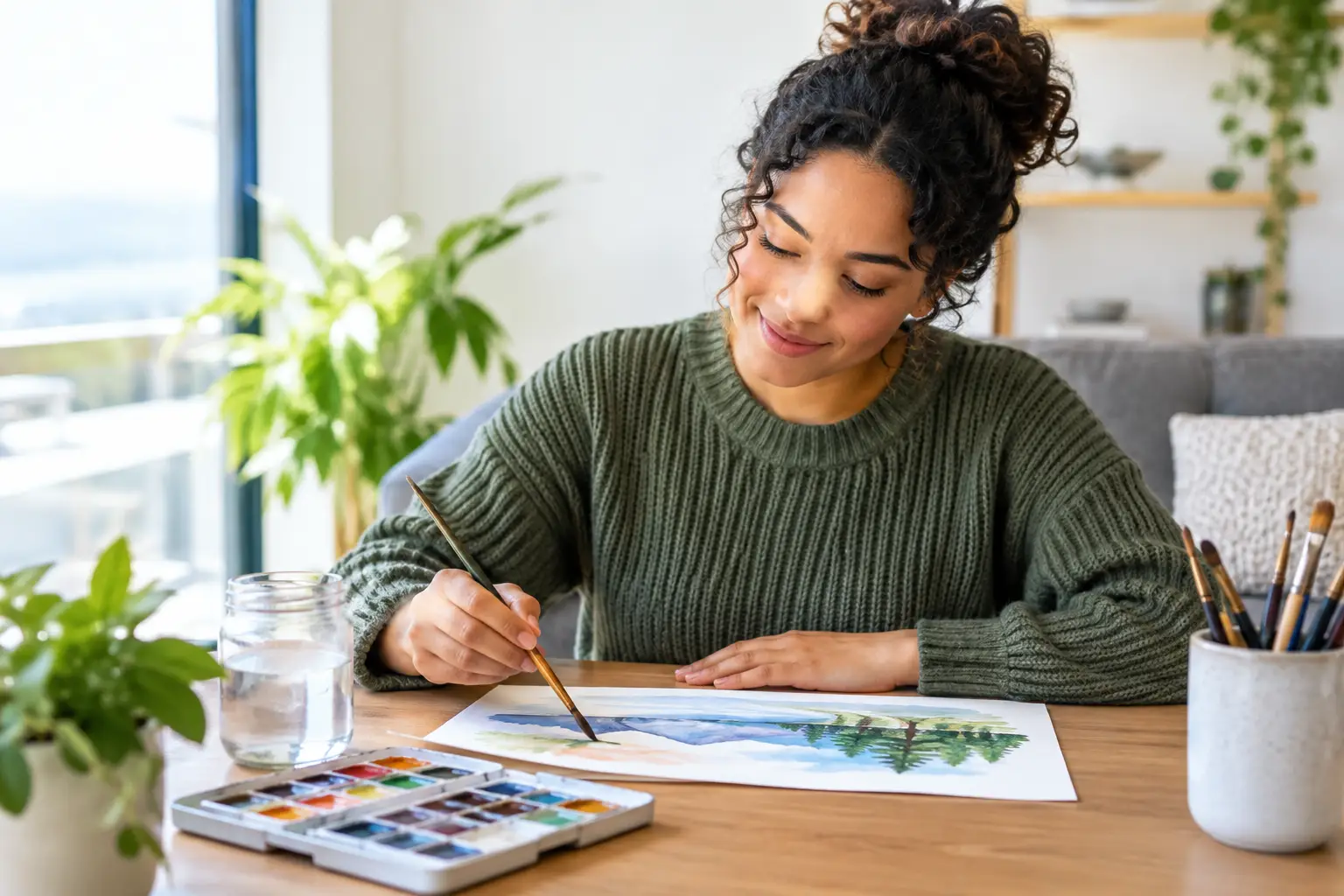
A hobby should not feel like another test you have to pass. Yet when energy is limited, pain changes from day to day, money is tight, or getting out of the house takes serious planning, even looking for accessible adult hobbies can feel overwhelming. The right activity is not the one that looks impressive online. It is the one you can return to, in a way that works for your body, mind, home and budget.
Hobbies can offer more than a way to fill time. They can give a week some shape, create a small sense of progress, and make it easier to connect with other people without having to explain your whole life first. There is no rule saying you must be productive, social, active or talented for it to count.
Start with your actual life, not an ideal one
A lot of hobby advice assumes everyone has spare cash, reliable transport, a quiet home and the same amount of energy every day. Real life is rarely that tidy. Before choosing anything, think about what is most likely to make an activity sustainable for you.
You may need something you can pause instantly when fatigue hits. You may prefer an interest that can be done from bed, on the sofa, at a table, outdoors for ten minutes, or with another person nearby. Sensory needs matter too: bright screens, noise, small print, strong smells and fiddly equipment can turn a promising idea into a frustrating one.
It can help to ask a simpler question than, ‘What hobby should I take up?’ Try, ‘What do I want more of?’ If you want calm, colouring, audiobooks or gentle gardening may suit. If you miss learning, a free online course, language app or local history project might be more satisfying. If isolation is the difficult part, a regular online game, book group or craft session may give you contact without the pressure of a big social event.
Accessible adult hobbies do not need expensive kit
The cost of starting is a genuine barrier for many people, particularly when you are already budgeting around disability-related costs. Avoid the pressure to buy a complete set of equipment before you know whether you enjoy something. Begin with what is available, borrow where possible, and build slowly.
Writing is a good example. It can mean a notebook and pen, voice notes on your mobile phone, typing a few lines, or dictating into speech-to-text. You do not have to write a novel. You could record family memories, make poems, review television programmes, or keep a journal of things that made you laugh.
Creative hobbies are often easier to adapt than people realise. Large-handled crochet hooks, ergonomic grips, lap trays, magnifiers and voice-controlled technology can make a difference, but they are not compulsory from day one. Collage, adult colouring, simple paper crafts and digital drawing can be kinder on hands than detailed work. If concentration comes and goes, choose projects that have a clear stopping point rather than one huge task waiting for you.
Listening-based hobbies deserve more credit as well. Audiobooks, podcasts, radio drama and music can be absorbing when reading print is difficult or screen time is exhausting. You might keep a note of favourite episodes, join a discussion group, or make themed playlists. That turns passive listening into an interest you can share.
Choose an energy level, then have a backup plan
Many disabled people know that a good day can be followed by a difficult one. A hobby does not have to be all or nothing. In fact, it often works better when it has different versions.
A gentle gardening hobby might mean tending pots from a chair on one day and simply checking seedlings from the window on another. Photography could involve a planned visit to a local park when you are able, but on low-energy days it might be taking close-up photos around your home. Cooking could be trying one new recipe occasionally, not standing for an hour every evening.
Think in three levels: a low-energy version, a usual version and an ‘I feel up to it’ version. This approach protects the enjoyment of the hobby. Missing a session is not failing. It is adapting.
For some people, movement-based hobbies are valuable, but the word ‘exercise’ can bring a lot of baggage. Chair-based stretching, seated dance, wheelchair skills, gentle swimming, adapted cycling or short accessible walks may be enjoyable when they are chosen for pleasure rather than punishment. A physiotherapist or other health professional may be able to advise where a condition makes certain movement unsafe. You are allowed to stop, rest and change your mind.
Finding connection without forcing sociability
Loneliness does not always disappear because you join a group. A crowded room, inaccessible venue or fast-moving conversation can leave someone feeling more alone. Online hobbies can be a safer starting point, particularly if travel, anxiety, communication needs or fluctuating health make in-person plans difficult.
Look for spaces with clear rules, active moderation and a pace that suits you. Smaller interest groups can be easier than large general social media feeds. Some people enjoy online quizzes, gaming groups, shared reading, virtual museum tours or craft-along sessions because there is an activity to focus on as well as conversation.
If you want to try a local group, contact the organiser first. Ask practical questions: Is there step-free access? Is there an accessible toilet? Can someone bring a carer or support person? Are there chairs with arms, a quieter corner, captions, hearing support, or a way to take breaks? A good organiser will treat these as ordinary questions, not an inconvenience.
It is also fine to attend once and decide it is not for you. The issue may be the group, the timing or the environment, rather than the hobby itself.
Make adaptations part of the plan
Accessibility is not an extra you earn after proving commitment. It is part of being able to take part. Small changes can have a big effect: a timer to prevent overdoing it, a supportive chair, a larger print pattern, a lighter tool, subtitles, reduced background noise, or permission to participate by listening rather than speaking.
Technology can open up options too. Screen readers, dictation, captions, adjustable text size and remapped controls can support gaming, learning, writing and creative work. But technology is not always straightforward, and not everyone wants more time on a screen. A physical hobby may be more grounding, while a digital one may remove travel and access barriers. There is no universally best choice.
Try not to compare your adapted way of doing something with somebody else’s version. If you garden using raised containers, paint from bed, play games with modified controls or take frequent rests, you are still gardening, painting, playing and taking part.
Give yourself a small, kind starting point
Motivation often arrives after you begin, not before. Set a starting point that is almost too easy: listen to ten minutes of an audiobook, write three sentences, plant one packet of seeds, complete one puzzle clue, or watch a beginner’s video without promising yourself anything more.
A regular cue can help. You might do your hobby after breakfast, during a favourite radio programme, or for a short time on a particular afternoon. Keep the equipment where it is easy to reach if you can. The fewer steps between you and the activity, the more likely it is to happen on a tired day.
It is worth noticing what you enjoy rather than judging what you achieve. Did it settle your thoughts? Did time pass more gently? Did you learn one small thing or feel a little less cut off? Those are meaningful results.
Talking Really is a place to have honest conversations about the parts of daily life that can be harder to explain elsewhere. If a hobby brings you a moment of interest, comfort or connection, it is not a small thing. Give yourself permission to begin where you are, and let it grow at your pace.