
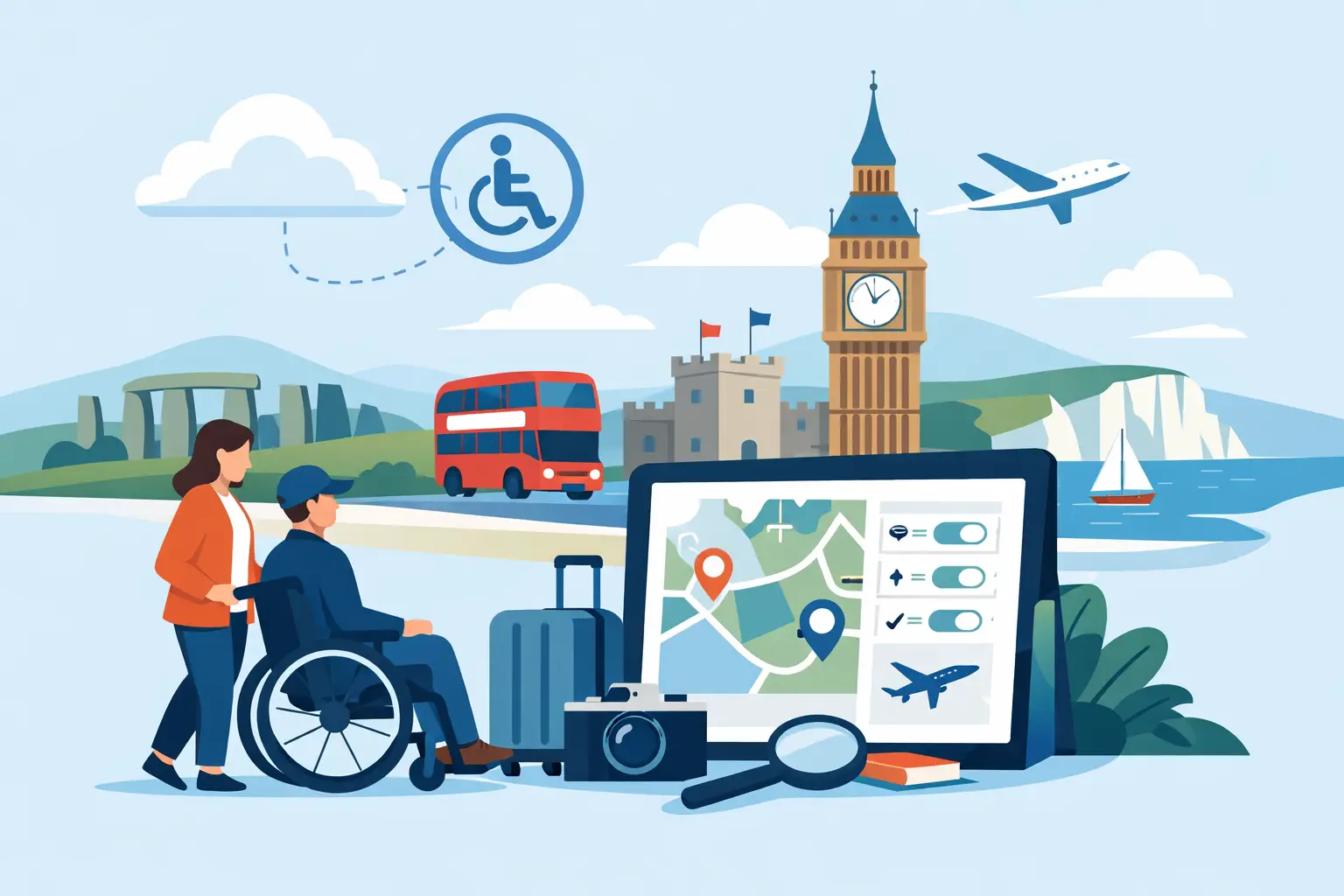
A hotel can call itself accessible because it has a ramp at the front door, while the only accessible room has a bath you cannot use or a bed that is too high to transfer onto. That is why an accessible travel planning guide needs more than a tick-box search. The details that make a trip workable are often the details left out of glossy adverts.
Travelling while disabled should not mean accepting a stressful or second-best break. It may take more preparation, and it is fair to say that out loud. But asking clear questions early can prevent the awful feeling of arriving somewhere and finding that the reality does not match what you were promised.
Start with what makes travel possible for you
Before choosing a destination, write down what you need to travel safely, comfortably and with as much independence as you want. This is not about proving that you are “disabled enough”. It is about making sure the trip suits your body, health, energy and support needs.
Think through the whole journey, not just the accommodation. A step-free hotel is of limited use if the station has no practical assistance available, the transfer vehicle cannot take your wheelchair, or the nearest accessible toilet is a long walk away. Equally, someone with chronic pain, autism, anxiety, a visual impairment, an invisible condition or a fluctuating illness may need different information from a wheelchair user.
Your essentials might include level access, a wet room, space beside the bed for a hoist, a fridge for medication, a quiet room, reliable lifts, a carer travelling with you, or a place to rest between activities. Be specific about measurements where they matter. “Wheelchair friendly” is not a measurement. The width of a doorway, the height of a bed and the turning space in a bathroom can make the difference between a holiday and a problem.
It can help to separate needs into two groups: non-negotiables and preferences. A sea view may be lovely, but safe bathing facilities or access to your medication are not things to compromise on.
How to check accommodation without relying on labels
Booking sites can be useful for ideas, but accessibility filters are often broad and inconsistent. Treat them as a starting point, not a guarantee. Contact the accommodation directly before paying, ideally in writing so you have a record of what was said.
Ask whether the accessible room is on the ground floor or served by a lift, and whether that lift is working reliably during your dates. Ask for current photographs of the bedroom and bathroom rather than marketing images. You may also need to know whether there is a step at the entrance, how far the accessible parking is from reception, and whether breakfast, the bar and outdoor spaces are accessible too.
For the bathroom, plain questions tend to get better answers. Is it a roll-in shower or a shower over a bath? Are there fixed grab rails? Is there a shower chair, and can it be removed if you bring your own? Is the toilet at a workable height, and is there transfer space on the side you need? If you use equipment, ask whether it can be delivered ahead of your arrival and stored securely.
Do not feel awkward about asking twice if an answer is vague. “There should be plenty of room” is not the same as confirmation. If staff cannot answer, ask them to measure or speak to a manager. It is reasonable to want facts before handing over your money.
Book travel support early, then confirm it
For rail travel in Great Britain, Passenger Assist can help arrange support at stations and with boarding and alighting. Tell the operator what would actually help, such as a ramp, guidance through the station, help with luggage, or time to reach a connection. Booking ahead is strongly recommended, especially for longer journeys or busy periods, but plans can still go wrong. Keep your booking details available and allow extra time where you can.
If you are flying, notify the airline or travel provider of any assistance you need as soon as you book. Airlines commonly ask for notice, and 48 hours is a useful minimum to work towards, though earlier is better. Explain your mobility equipment accurately, including its weight, folded size and battery type. Powered wheelchairs and scooters can involve additional safety rules, so never assume they will be handled like ordinary luggage.
Ask how your chair will be protected and returned to you. Some people can stay in their own wheelchair until the aircraft door, while others may need an aisle chair. If transferring is difficult, explain this rather than simply selecting “wheelchair assistance”. The phrase covers a wide range of needs.
Driving can offer more control, but it brings its own checks. Confirm accessible parking at your accommodation, look into local parking arrangements, and plan realistic stops. A Blue Badge can be helpful, but it does not automatically guarantee free parking or the same rights everywhere, particularly outside your local area or overseas.
Plan for energy, not just distance
Many travel plans fail because they are based on what is technically possible rather than what is manageable. A museum may be step-free, but if it takes two buses, a steep walk and an hour of queueing to get there, it may still be too much for that day.
Build in recovery time from the start. Choose one main activity rather than trying to see everything, and look for seating, quiet periods, accessible toilets and places to charge equipment. If you use a wheelchair or mobility scooter, check whether surfaces are cobbled, sandy, steep or uneven. “Old town charm” can mean difficult paving.
For days out, call venues directly and ask about the route from the car park or bus stop, companion tickets where relevant, sensory information, and whether Changing Places facilities are available. Not every accessible toilet meets every person’s needs. If personal care is part of your day-to-day life, this is worth checking properly rather than hoping for the best.
There is no prize for packing a schedule until it hurts. A good holiday may include a slow morning, a nap after lunch or a change of plan because your symptoms have flared. That is not wasted time. It is travelling in a way that works for you.
Protect your health, equipment and money
Travel insurance can be harder to arrange when you have a pre-existing condition, but going without it can be a costly risk. Read the policy wording carefully and declare conditions, medication and equipment honestly. The cheapest policy is not always the best one if it excludes the reason you may need support.
Take enough medication for the trip, plus extra where possible in case of delays. Keep essential medication in hand luggage when flying, in its original packaging, and consider carrying a copy of your prescription or a clinician’s letter. If medication needs refrigeration, get written confirmation from the accommodation or airline about what they can provide.
If you are travelling abroad, check healthcare arrangements for the country you are visiting. A UK Global Health Insurance Card can be useful in some places, but it is not a replacement for travel insurance and will not cover every cost or situation. Also check whether your mobility equipment is insured for loss or damage, including when it is in the hands of an airline or transport company.
If you receive benefits, a holiday is not automatically a problem, but time abroad can affect some claims depending on the benefit, how long you are away and your individual circumstances. Check the current rules for your own claim before booking, particularly if you are travelling outside Great Britain or for a longer period.
Keep a back-up plan without expecting the worst
Accessible travel involves more moving parts, so a small back-up plan can bring real peace of mind. Save booking confirmations, assistance reference numbers, medical contacts and accommodation details somewhere you can access without relying on patchy signal. Take photographs of mobility equipment before handing it over for transport, and keep key measurements on your phone.
It is also worth deciding what you would do if a lift is out of order, a room is unsuitable or your assistance booking is missed. That may mean knowing who to call, keeping some emergency money aside, or travelling with a person who understands your needs. Planning for problems is not being negative. It is giving yourself options.
An accessible travel planning guide should leave room for joy
The aim is not to turn your holiday into a project manager’s spreadsheet. It is to do the difficult checking before you leave, so you can spend more of the trip enjoying yourself. Some places will not be suitable, and it can be disappointing to rule them out. But a destination that meets your actual needs is far more likely to give you rest, choice and good memories.
If you are unsure where to start, talk it through with someone who gets it. At Talking Really, real talk means making space for the practical questions as well as the nerves, excitement and frustration that can come with travelling disabled. You deserve a break that is planned around your life, not around other people’s assumptions.