
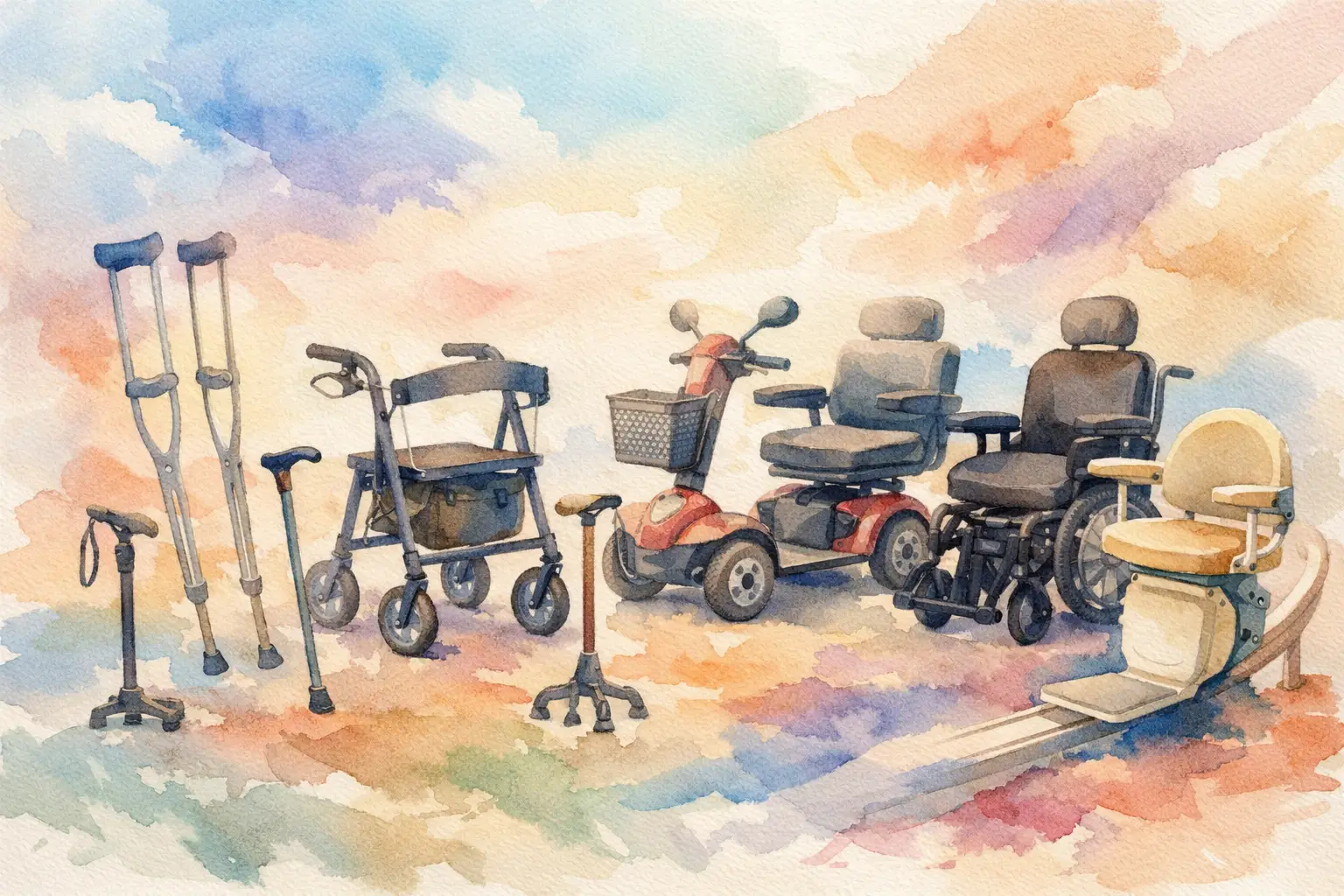
Some days, getting to the kitchen feels like a hike. Other days, you might manage the school run, a GP appointment or a trip to the shops, then spend the next two days paying for it. That is exactly why finding the best mobility aids for fatigue is not about giving up. It is about protecting your energy so life does not become one long recovery period.
Fatigue is awkward because it does not always look dramatic from the outside. You can seem fine while your body is already running on empty. That makes mobility choices harder, especially if you worry that using an aid means you are being lazy, dramatic or taking support away from someone else. Real talk - if an aid helps you do more, recover better or stay safer, it is there for you too.
What makes the best mobility aids for fatigue?
The right aid depends on what your fatigue actually does to you. For some people, it is muscle weakness, dizziness or pain after standing. For others, it is post-exertional malaise, breathlessness, balance problems or the simple fact that walking uses up energy needed for washing, working or cooking.
That is why the best mobility aids for fatigue are not always the most heavy-duty or expensive ones. The best one is the one that reduces strain without creating a new problem. A bulky scooter that is hard to lift into a car may be less useful than a light folding wheelchair. A walking stick may help with balance but do very little if the main issue is full-body exhaustion.
It also depends on when fatigue hits. If you are mostly affected outdoors, one kind of aid may help. If standing in queues, cooking or getting around your home is the bigger issue, a different option may be more useful.
1. A rollator for steady support and built-in rests
A rollator can be a very good middle ground if you can still walk but tire quickly. It gives you something stable to lean on, which can reduce the effort of walking and help with balance. The built-in seat is often the real game changer. Being able to sit down when fatigue starts climbing can stop a manageable outing turning into a complete wipeout.
This can work well for people with fluctuating conditions, arthritis, chronic pain, neurological conditions or long-term fatigue where pacing matters. It is especially helpful if standing still is harder than walking.
The trade-off is that rollators are not ideal everywhere. Some are awkward on public transport, in cramped shops or on uneven pavements. If your fatigue comes on very suddenly, you may still need something that removes walking altogether.
2. A manual wheelchair for saving energy on harder days
A wheelchair is often treated as a last resort, but that thinking can keep people stuck at home. If walking any real distance drains you badly, a manual wheelchair can help you keep energy for the parts of the day that matter more.
This does not mean you have to use one all the time. Plenty of people use a wheelchair only for longer outings, busy places or flare-up days. That is still valid. Part-time use is still use.
The key question is whether you can self-propel without making fatigue worse. If pushing yourself leaves you exhausted or painful, the chair may only work if someone else can push it. That can still be useful, but it changes how independent it feels.
A lightweight frame matters more than many people realise. A heavy wheelchair is harder to push, harder to lift and more likely to sit unused in the hallway.
3. A powered wheelchair when pushing is too much
If upper body strength, pain or fatigue make a manual chair unrealistic, a powered wheelchair may be the better fit. For many people, this is what turns impossible journeys into manageable ones.
Powered wheelchairs can be especially useful where fatigue is severe, unpredictable or linked to conditions that worsen with exertion. They allow you to move around without spending all your energy budget on getting from A to B.
There are practical things to think about. Storage, charging, transport and pavement access all matter. Not every home has the space. Not every car can carry one. And if you are dealing with benefits applications or local authority support, the process can feel slow and frustrating.
Still, if your current way of coping means cancelling plans, avoiding appointments or crashing after every trip, a powered chair may be less of a luxury than it first sounds.
4. A mobility scooter for outdoor trips and local travel
Mobility scooters can be brilliant for fatigue, particularly if you need help with outdoor distances rather than moving around indoors. They are often a good choice for shopping, getting to local appointments, visiting family or simply being able to leave the house without planning a full recovery day afterwards.
Scooters can feel more approachable for some people than wheelchairs, though that is personal. Some people prefer them because they are practical for local journeys and do not involve self-propelling.
The downside is that scooters are less flexible indoors and can be harder to transport unless you have a boot scooter or vehicle setup that works for you. Weather is another issue in Britain. Rain, cold and rough pavements can make even a good scooter less comfortable than it looks on paper.
5. A walking stick or crutch for balance and shorter distances
A stick or single crutch can help if fatigue comes with balance issues, joint instability or leg weakness. For some people, taking a bit of weight off one side and having extra confidence underfoot is enough to make short walks manageable.
But this is where honesty matters. A stick can be useful, but it is often overestimated for fatigue. If your whole body is exhausted, a stick will not magically fix that. In some cases, using one can even add strain to your wrist, shoulder or back if it is the wrong height or not the right aid for your needs.
So yes, it can help. Just do not feel you have failed if it is not enough.
6. A perching stool or shower seat for saving energy at home
Not all mobility aids are about getting outside. Fatigue often hits hardest in the boring, everyday bits of life - showering, cooking, brushing your teeth, waiting at the kettle. A perching stool in the kitchen or bathroom can make a surprising difference because it cuts out the drain of standing.
A shower seat is another one people sometimes put off for too long. If showering wipes you out, makes you dizzy or means you have to lie down straight afterwards, sitting down can save both energy and risk.
These aids are not dramatic, but they can be some of the most useful because they protect your baseline day after day.
7. A small portable seat for queues and stop-start days
If you can usually walk but struggle with standing still, a lightweight folding seat or cane seat can be worth considering. This will not replace a bigger aid if your fatigue is severe, but it can help with waiting for buses, queues, events or long days of appointments.
This kind of aid suits people who want a bit of backup without carrying something large. It is less about mobility in the strict sense and more about pacing well enough to get through the day.
How to choose without wasting money
Start with your worst pattern, not your best one. If you only judge based on a rare good day, you are more likely to buy something that looks tidy and sensible but does not actually help when you need it.
Think about where fatigue causes the biggest loss. Is it getting around outside, standing at home, managing appointments, or recovering after exertion? The answer usually points you towards the right type of aid.
It helps to ask a few blunt questions. Can you use it safely on your own? Can you get it through your front door? Can you store it? Can you lift it? Will using it save energy overall, or just shift the effort somewhere else?
If possible, try before you buy. What feels fine for five minutes in a showroom may feel very different after an hour out. If you have access to an occupational therapist, physio or mobility shop that allows testing, that can save a lot of regret.
The emotional side nobody talks about enough
A lot of people delay using mobility aids because of pride, fear or other people's opinions. That is understandable. There can be grief in realising you need help. There can also be anxiety about looking "not disabled enough" on one day and "too disabled" on another.
But support does not need to be earned by reaching rock bottom first. If an aid helps you stay safer, more independent and less exhausted, that is enough reason.
Many disabled people know this already, but still need to hear it again when the guilt kicks in. Using an aid is not failing. It is adapting. And adapting well is often what makes daily life possible.
If you are weighing up your options, try to focus less on what the aid symbolises and more on what it gives back. More time upright. More chance of going out. Less payback. More room for the rest of your life. That is a worthwhile trade any day.