
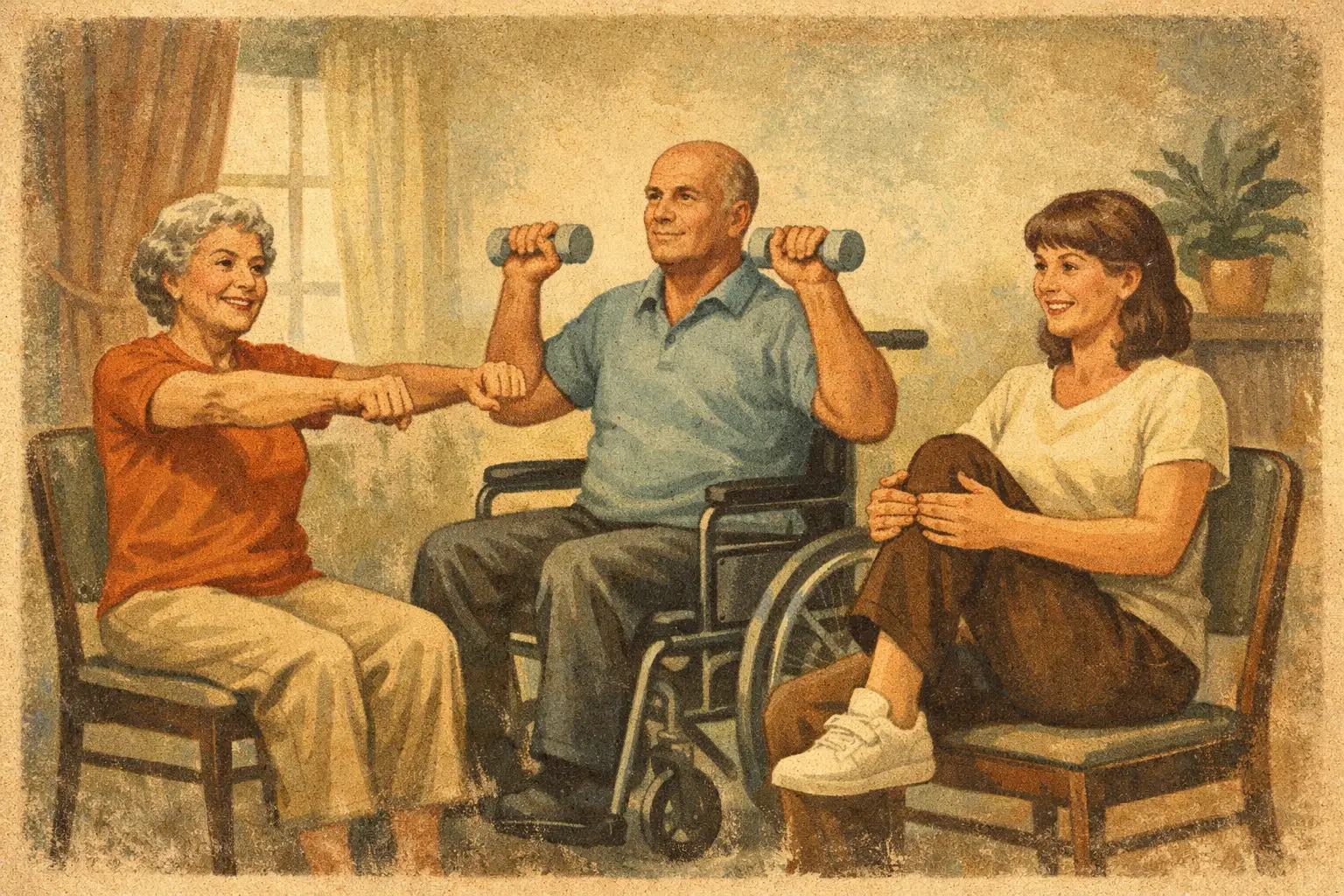
Some days, getting dressed can take most of your energy. On others, you may be ready to move but standing exercise, busy gyms or advice aimed at “getting fit” simply does not work for your body. Chair based exercise for disabled adults offers another option: movement that can begin where you are, with a stable chair, a little space and no need to prove anything to anyone.
This is not about pushing through pain or chasing somebody else’s version of health. It is about finding safe, manageable ways to move your joints, support circulation, build confidence and feel more connected to your body. A few minutes can count. Resting can count too.
What chair-based exercise can realistically help with
Seated exercise is often described as gentle, but gentle does not mean pointless. Depending on your condition, energy levels and the movements available to you, regular chair-based activity may help reduce stiffness, maintain joint movement, improve circulation and support everyday tasks such as reaching, turning, transferring or using mobility equipment.
It can also be an emotional reset. When pain, fatigue, anxiety, low mood or isolation have narrowed your day, choosing one movement can be a small reminder that your body is still yours. That is not a cure, and it does not replace medical treatment. It is a practical way of working with what is possible today.
The benefits vary. Someone with limited leg movement may focus on shoulders, hands and breathing. Someone who can use their legs but cannot stand safely may work on ankle movement and seated marching. If you live with fluctuating symptoms, the same routine may feel easy one week and far too much the next. Adapting is not failing. It is sensible pacing.
Set yourself up for a safer session
Before starting, choose a firm, stable chair that will not roll or slide. A dining chair is often better than an office chair with wheels. If your balance is affected, place the chair against a wall if that feels secure, and keep walking aids, a phone and anything else you may need within reach.
Try to sit with your feet supported where possible, your back comfortably positioned and your shoulders relaxed. You do not need perfect posture. The aim is to feel steady enough that you are not using all your energy trying not to slip or lean.
A few checks are worth making before each session:
- Wear clothing that does not restrict your breathing or movement.
- Leave enough room around the chair so you do not knock your hands or elbows.
- Have a drink nearby, particularly in warm weather or if medication leaves you dry-mouthed.
- Avoid exercising straight after a heavy meal if that causes discomfort.
- Start with a time limit, such as three to five minutes, rather than waiting until you feel exhausted.
If you have been advised to avoid certain movements after surgery, because of a heart condition, severe osteoporosis, unstable joints, pressure sores, dizziness or another health concern, speak with a GP, physiotherapist, occupational therapist or relevant clinician first. Stop and seek medical advice if you have chest pain, fainting, unusual shortness of breath, sudden weakness, or pain that is sharp, new or worsening.
A simple chair-based exercise routine to adapt
Start by taking a moment to notice how you feel. Rate your pain, breathlessness and fatigue in your own words. “Manageable”, “wobbly” and “already done in” are all useful answers. They tell you whether today is a movement day, a very light movement day, or a rest day.
Begin with breathing and a body check
Sit comfortably and let your hands rest on your thighs or arms of the chair. Breathe in gently through your nose if you can, then breathe out slowly. There is no need for a huge breath. Try three slow breaths, allowing your shoulders to soften on the out-breath.
This is particularly useful if you tend to hold tension in your neck or chest. If deep breathing makes you light-headed, return to your normal breathing and skip this part.
Wake up the hands, wrists and shoulders
Open and close your hands slowly, as though you are gently squeezing and releasing a sponge. Then make small circles with your wrists in both directions. If gripping is difficult, simply spread your fingers as far as is comfortable and relax them again.
For the shoulders, lift them a little towards your ears, pause, then let them lower. Follow with slow shoulder rolls backwards. Keep the movement small if you have shoulder pain, a history of dislocation or limited range of movement. The purpose is not to force a full circle.
You can add a seated reach by lifting one arm forwards or upwards only as far as feels safe, then lowering it with control. Alternate sides. If one arm is weaker or painful, let the other arm do more, use a smaller movement, or leave the reach out entirely.
Add gentle upper-body turns
With your hips supported on the chair, place your hands on your thighs. Slowly turn your head and upper body a small amount to look to one side, then return to the middle. Repeat on the other side.
Keep it slow. If turning your neck causes dizziness, visual disturbance or pain, keep your head facing forwards and make the movement from your shoulders and ribs instead. For some people, even a tiny shift is enough.
Move the legs and ankles if available to you
If both feet are on the floor, lift one heel while keeping the toes down, then lower it. Repeat with the other foot. This ankle movement can support circulation after long periods of sitting. You might then lift the toes while keeping the heels down.
If it feels comfortable, try a slow seated march: lift one knee a few centimetres, lower it, then repeat on the other side. Hold the chair sides if that helps you feel stable. You do not need to lift high, and you can work one leg only if that reflects your mobility.
If you cannot move your legs independently, you may still be able to focus on your upper body, breathing and small posture changes. Do not let a standard routine tell you what “counts”. A movement plan should fit the person, not the other way round.
Finish by easing down
Return to stillness for a few breaths. Notice whether your hands, feet or shoulders feel warmer, looser, tired or unchanged. All of those responses are information. If you feel fine, resist the urge to immediately double the routine tomorrow. Giving your body time to respond can prevent a boom-and-bust cycle.
How often should you do chair-based exercise?
Consistency matters more than intensity, but consistency has to be realistic. Three minutes after breakfast on two days a week may be a better starting point than a 30-minute plan that leaves you wiped out for days.
You could attach movement to something already in your routine: after making a cuppa, during the adverts, before an online appointment or while waiting for the kettle. Some people prefer one short session; others find several one-minute bursts less tiring. There is no prize for doing it in one go.
A simple diary can help you spot patterns. Note what you did, roughly how long for and how you felt later that day and the following morning. This is useful when symptoms are unpredictable, because delayed fatigue and pain are still part of the picture. If an activity repeatedly worsens your symptoms, reduce the number of repetitions, the range of movement or the frequency, and consider asking a professional for tailored advice.
Make it yours, not a performance
Exercise advice often assumes everybody wants to work towards weight loss, a certain step count or a dramatic transformation. Those goals may not be relevant, accessible or healthy for you. Your goal might be to ease stiff fingers before using your phone, prepare your body for a transfer, feel less tense after a difficult call, or simply have a reason to put music on.
It can help to make the session pleasant. Choose a favourite song, exercise in clothes you feel comfortable in, or do it while speaking to a friend. If social isolation is part of what makes movement hard, a live online session or community check-in may offer encouragement without the pressure of a gym environment. Talking Really is built around that kind of judgement-free, real-life conversation.
There will be days when chair-based exercise means one shoulder roll, one ankle movement or deciding not to start because rest is the safer choice. That is not giving up. It is listening. Start small, keep the chair stable, and let your routine grow only when your body gives you a clear and kind enough yes.