
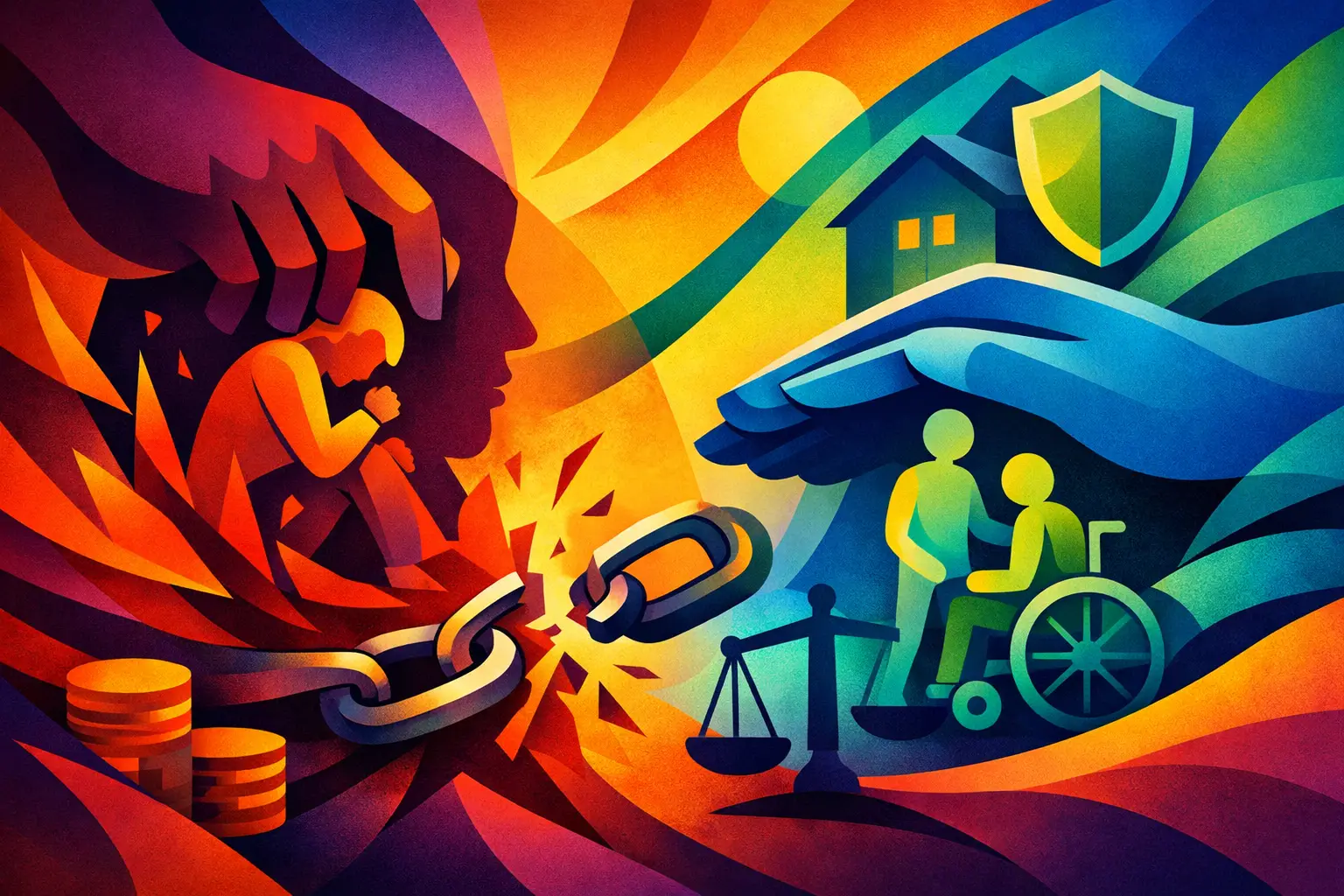
When someone else has access to your money because you need support, it can be hard to tell where help ends and control begins. This financial abuse disability guide is for anyone who feels uneasy about how a partner, relative, friend, carer or appointee is handling their money, benefits or spending.
Financial abuse can happen to anyone. Disabled people can face extra risk where another person helps with banking, paperwork, shopping, appointments or benefits. Needing practical support does not mean giving up your right to make choices, understand what is happening, or have money for yourself.
What financial abuse can look like
Financial abuse is when someone uses, controls or takes your money, property or benefits without your genuine agreement. It is not always dramatic. It can build slowly, especially when the person says they are only trying to help, or makes you feel guilty for asking questions.
Warning signs can include a person taking your bank card and refusing to return it, checking your account without permission, pressuring you to change a will, borrowing money and never repaying it, or stopping you from seeing letters about benefits. They may insist you cannot manage anything yourself, even when you can make some or all decisions with the right support.
It can also look like a partner controlling every purchase, telling you that your Personal Independence Payment is "their" money, or making you account for small amounts while spending freely themselves. A carer or family member may take cash meant for food, transport, aids, prescriptions or social activities. Someone might use your name to take out credit, make online purchases, or move your benefits into an account you cannot access.
The key question is not whether you need help. It is whether the help is being given honestly, with your knowledge, and in a way that respects your wishes.
Financial abuse disability guide: your rights matter
Disabled adults have the same right as anyone else to safety, privacy and control over their finances. If you receive benefits, they are paid for your needs. Nobody automatically has a right to use them simply because they live with you, care for you, or say they know you well.
Sometimes a person has a legitimate formal role. For example, a DWP appointee may manage benefits for someone who cannot manage their benefit claim themselves. An attorney may make certain decisions under a registered Lasting Power of Attorney. These roles carry responsibilities. They are not permission to spend money for personal gain, isolate you from information, or ignore your known wishes.
Capacity is not all or nothing. You may be able to decide what to buy day to day, but want assistance with forms or larger bills. You may communicate your decision differently, need information in an accessible format, or need extra time. None of that means another person can take over every part of your life.
A shared bank account can also be complicated. It may make household bills easier, but it gives both account holders access to the money in it. If you are worried about somebody emptying the account, speak to the bank privately before making a sudden change. Ask what protections or alternative arrangements are available for your situation.
Trust the feeling that something is not right
Abuse often comes with confusion. You may have been told you are forgetful, difficult, selfish or incapable. You might rely on the person for personal care, housing, transport or emotional support, which can make speaking up feel risky. You may also be worried about losing your relationship with children, pets, family or your wider community.
That does not make what is happening your fault. You do not need to prove every detail before asking somebody to listen. If you can do so safely, start noting what concerns you: dates, missing amounts, screenshots, letters, receipts, changes to passwords, or comments that made you feel pressured. Keep this somewhere the person cannot access, or share it with someone you trust.
Do not confront the person if you think it could lead to threats, violence, withdrawal of care or homelessness. Your safety comes first, and support can help you make a plan without forcing you into a decision before you are ready.
What to do if someone is controlling your money
The right next step depends on how immediate the risk is, who is involved, and how much you rely on them. If you are in immediate danger, call 999. If speaking aloud is difficult or unsafe, you may be able to use emergency text services if you have registered in advance, or seek help from a safe person nearby.
If the situation is not an emergency, these actions can help you regain some control:
- Speak to your bank or building society using a number you find independently, not one given to you by the person you are worried about. Explain that you may be experiencing financial abuse and ask for a safe way to communicate.
- Contact your local council's adult safeguarding team. In England, Wales and Scotland, councils have safeguarding duties and can consider concerns about abuse or neglect. Tell them about any care, communication or access needs you have.
- If benefits are involved, contact the DWP and explain that you are concerned about how your claim or payments are being managed. Ask what can be reviewed, particularly if you have an appointee.
- Talk to an independent advocate, trusted support worker, GP, social worker, solicitor, advice service or a friend who is not connected to the person causing concern.
If you think a crime has taken place, such as theft, fraud, coercion or someone using your identity, you can report it to the police on 101. It is still okay to ask for advice first if you are unsure. Reporting is a choice in many situations, but professionals must act where there is a serious risk to you or someone else.
Small practical changes can make a difference
Where it is safe, ask for your own bank card and make sure your PIN, online banking passwords and email password are not known by anyone else. Use a password that is not based on your birthday, address or condition. If changing passwords could alert or anger someone, do not do it alone. Ask your bank or a trusted professional to help make a safer plan.
You could ask for benefit letters, bank statements and appointment information in a format you can read and keep. This might mean large print, Braille, easy read, email, paper copies or information explained over the phone. Being able to see what is coming in and going out is a practical form of independence.
If somebody helps you budget, consider agreeing clear boundaries. For example, they can support you to pay bills while you keep access to your own account and receive copies of statements. If you contribute to a household, ask for a straightforward breakdown of rent, food and utilities. A reasonable question about money should never be treated as bad behaviour.
It may help to set up a separate account for your personal spending, if that is workable for you. This is not the answer for everyone, particularly where benefits, debts or joint bills are involved, but it can create a little breathing room. Make decisions at your pace, with independent advice where possible.
If the person is family or your carer
Financial abuse is often dismissed when it happens within families. People may say it is a private matter, that relatives are under pressure, or that carers deserve compensation. Caring can be demanding, but stress never justifies taking money, controlling benefits or making a disabled person feel frightened in their own home.
You can care about someone and still need protection from their behaviour. You can be grateful for help and also say no to access to your money. Both things can be true.
If you depend on the person for care, tell adult safeguarding about that clearly. Ask them not to contact the person before they have considered your safety. You may need support to arrange alternative care, accessible communication or somewhere safe to stay. You deserve to be involved in decisions about what happens next.
You do not have to sort this alone
Financial abuse can make people feel ashamed, but the shame belongs with the person abusing trust, not with you. Start with one safe conversation, even if all you can say is: "I need help because somebody is controlling my money." That is enough to begin.
Talking Really is a judgement-free space for real talk about the parts of disability life that can feel difficult to explain. Your money should support your choices, comfort and security. You deserve help that leaves you with more control, not less.