
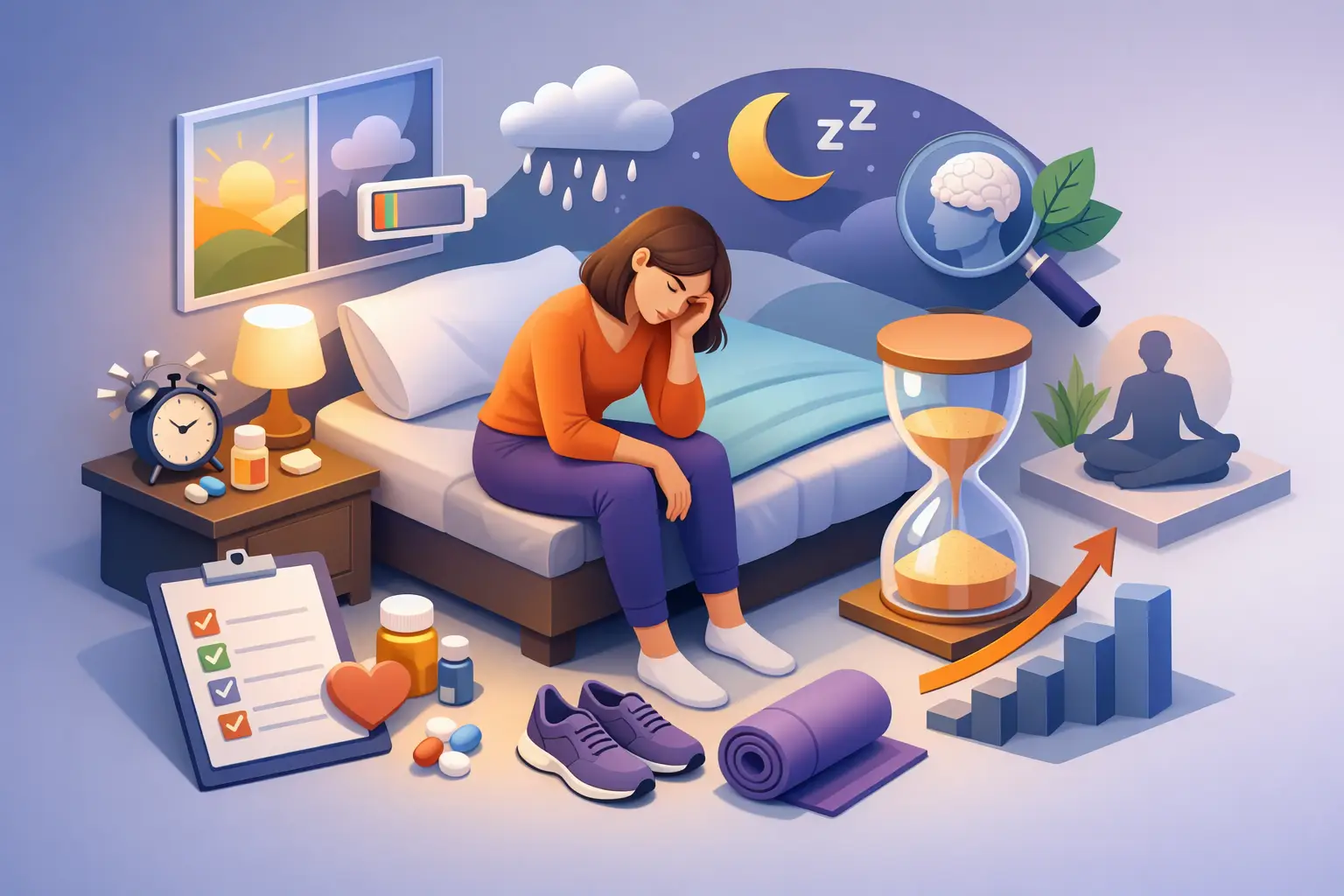
Some days chronic fatigue does not feel like tiredness at all. It feels like your body has quietly pulled the plug on everything at once - concentration, movement, patience, even speech. If you are looking for a guide to managing chronic fatigue, you probably do not need clichés about getting an early night. You need something more honest and more useful.
Chronic fatigue affects daily life in ways other people often miss. It can make basic jobs feel unpredictable, knock confidence, and leave you questioning whether you are doing too much or somehow still not doing enough. That can be especially hard when you are also dealing with work, benefits, family expectations or the pressure to explain yourself over and over again.
What a guide to managing chronic fatigue should start with
The first thing to say is this: managing chronic fatigue is rarely about finding one perfect fix. It is usually about reducing the damage caused by overdoing it, learning your own patterns, and building a life that works better around limited energy. That sounds simple on paper. In real life, it can take trial and error.
Fatigue also is not the same for everyone. For some people it comes with pain, dizziness, brain fog, poor sleep or worsening symptoms after activity. For others it sits alongside long-term health conditions, mental health pressures, medication side effects, or post-viral illness. So while the broad ideas in this guide can help, it always depends on what is driving your fatigue and how your body responds.
Start by noticing your energy, not fighting it
A lot of people spend years trying to push through fatigue because that is what they have been taught to do. Keep going. Try harder. Rest later. The problem is that with chronic fatigue, pushing through often borrows energy from tomorrow, or from the rest of the week.
It can help to think in terms of patterns rather than willpower. When do your symptoms tend to be worst? What kinds of activity wipe you out fastest? Physical tasks and mental tasks both count here. A supermarket trip, a difficult phone call, poor sleep, bright lights, stress, cooking, showering, travel and paperwork can all drain energy.
Keeping a short diary for a week or two can be useful. Nothing fancy. Just note what you did, how you felt before and after, and whether symptoms flared later on. This is not about policing yourself. It is about spotting the hidden cost of everyday life.
Pacing is not giving up
Pacing is one of the most useful tools in any guide to managing chronic fatigue, but it is often misunderstood. It does not mean doing nothing. It means trying to do activities in a steadier way so you avoid the boom-and-bust cycle where one better day leads to three worse ones.
That might mean splitting tasks into smaller chunks, sitting instead of standing when you can, resting before you hit the wall rather than afterwards, and leaving space between demanding jobs. If showering takes a lot out of you, you might plan that as your main task for the morning. If a benefits form is mentally draining, doing ten minutes at a time may be more realistic than trying to finish it in one sitting.
The hard part is emotional. Pacing can feel frustrating because it asks you to respect limits you did not choose. But respecting those limits is often what helps protect your energy over time.
Build routines that reduce effort
When energy is low, every decision can feel like work. A useful routine is not about becoming strict or productive. It is about cutting out avoidable effort.
Try looking at the parts of your day that repeatedly cause strain. Mornings are a common one. If getting washed, dressed and fed is enough to leave you shaky, think about what could make that easier. Laying clothes out the night before, keeping essentials in one place, using a stool in the kitchen or bathroom, or choosing simpler meals can all help.
Good routines are usually boring in the best possible way. They take pressure off. The same goes for admin. If post, appointments and paperwork drain you, choose one small time slot for dealing with them instead of letting them hang over the whole week.
This is where aids and adaptations matter too. If something saves energy, it is not laziness. It is strategy. That could be online food shopping, a shower seat, batch cooking when you have a better patch, voice notes instead of typing, or asking someone else to handle one task that always tips you over the edge.
Rest properly, not just accidentally
There is a difference between planned rest and collapsing because you had no choice. Planned rest tends to work better because it comes before symptoms have completely escalated.
Proper rest also is not always the same as sleep. Sometimes it means quiet, low-stimulation time with no demands. For some people, that means lying down in a dim room. For others, it means listening to something gentle, closing their eyes, or stepping away from conversation and screens.
The point is to let your system calm down, not to squeeze in another task while technically sitting still. Rest can feel unproductive, especially if you are used to proving your worth through doing. But if regular rest helps you function more consistently, it is serving a real purpose.
Food, hydration and sleep still matter - but keep it realistic
People with chronic fatigue are often given very basic advice about sleep, food and water as if that settles it. Still, those basics do matter, just not in a magic-cure way.
Eating regularly can help stop your energy dipping further, especially if fatigue makes it easy to skip meals. But the perfect diet is not the goal here. The goal is manageable nourishment. That might be simple, repeat meals you can tolerate and prepare without too much effort.
Hydration matters too, particularly if fatigue comes with headaches, dizziness or feeling washed out. Keeping drinks nearby and choosing easy options can make more difference than ambitious health plans you cannot sustain.
Sleep is trickier. Many people with chronic fatigue sleep badly, sleep at odd hours, or wake feeling unrefreshed. Gentle consistency can help, but do not blame yourself if your sleep is messy. Focus on what supports rest rather than chasing an ideal routine that does not fit your symptoms.
Talk to a GP if fatigue is new, worse or unexplained
Chronic fatigue should not be written off automatically. If it is new, worsening, or not yet investigated, it is sensible to speak to a GP. Fatigue can be linked to a wide range of conditions, medication effects, nutritional issues, sleep problems and mental health difficulties. Sometimes there are treatable factors in the mix.
If you struggle to explain what is happening, bring notes. Be clear about how fatigue affects daily tasks, not just how tired you feel. Saying you cannot reliably cook, wash, concentrate, travel or recover after activity gives a fuller picture than saying you feel exhausted.
If appointments are hard, it may help to take someone with you, ask for reasonable adjustments, or keep a record of symptom patterns beforehand. You do not need to sound polished to deserve help.
Work, benefits and the pressure to look fine
One of the cruellest parts of chronic fatigue is that people may only see you in brief moments when you are managing to hold it together. They do not always see the crash afterwards, the cancelled plans, or the fact that one ordinary task can use up the day.
That matters at work and in the benefits system. If fatigue affects what you can do safely, reliably and repeatedly, it is worth documenting that. A task you can do once, badly, at a heavy cost is not the same as a task you can do consistently.
At work, adjustments might include altered hours, home working, longer recovery time between tasks, or reduced physical and cognitive demand. Whether those adjustments are possible depends on the job, but asking for support is not a failure.
For benefits or assessments, real-life examples matter. Explain what happens when you try to do things, how often symptoms vary, and what the after-effects are. The detail can feel repetitive, but it helps show the reality.
Be careful with advice that blames you
You will come across people who are certain they know the answer to your fatigue. Move more. Think positively. Try harder. Buy this supplement. Cut out that food. Some suggestions may be harmless or even useful, but blanket advice can do real damage.
If something helps, great. If it leaves you worse, that matters. Managing chronic fatigue often means getting more selective about whose opinions you carry. The most helpful advice usually leaves room for complexity and does not treat your body like a moral test.
There is also the emotional side. Long-term fatigue can shrink your world, strain relationships and make you feel guilty for needing help. That is not weakness. It is what happens when people are trying to survive within tight limits. Support, whether from people around you or spaces like Talking Really, can make that weight a bit easier to carry.
Give yourself permission to work with your body
A good life with chronic fatigue may not look like the life you expected. That grief is real. But working with your body rather than constantly against it can still create more steadiness, more clarity and sometimes more room to breathe.
Start small. Notice patterns. Pace earlier. Make tasks easier where you can. Say no sooner. Ask for help before things become impossible. None of that is glamorous, but it is often what makes everyday life more manageable.
If your energy is limited, it deserves to be used with care. That is not lowering the bar. That is treating yourself like someone worth supporting.