
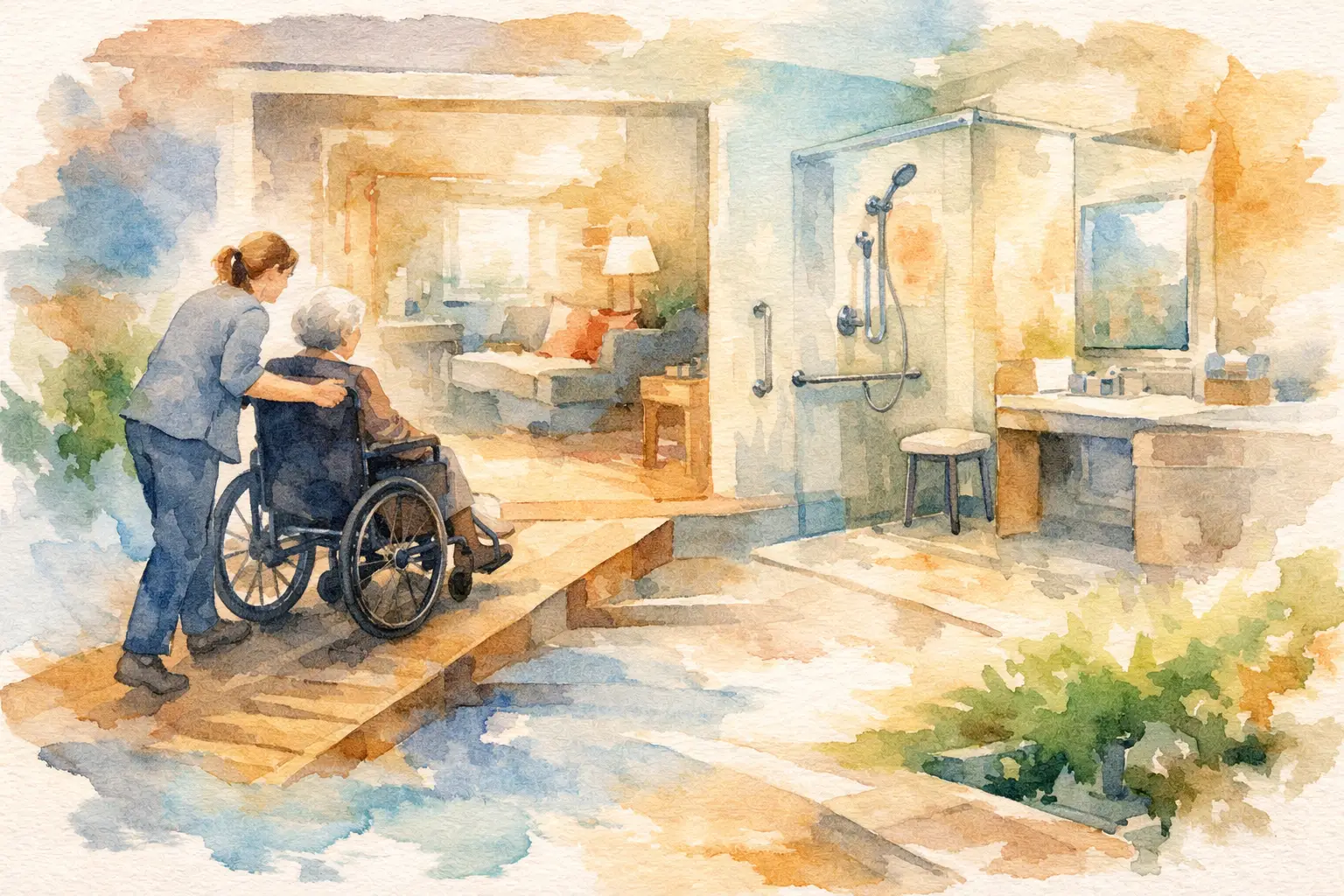
A home can start feeling wrong in small ways before it feels impossible. You begin avoiding the bath because getting in hurts, leaving things upstairs because the stairs wipe you out, or planning your whole day around one awkward doorway. If you are working out how to make home accessible, the best place to start is not with expensive equipment or a full renovation. It is with the moments in your day that are already telling you what is not working.
That matters because accessibility is not one fixed standard for every disabled person. What helps someone with chronic pain may be different from what helps someone with low vision, poor balance, fatigue, sensory overload or breathlessness. Some people need structural changes. Others need better layout, better lighting, and a few pieces of equipment used in the right places. Real talk - the goal is not a perfect house. The goal is a home that asks less from your body and mind.
How to make home accessible by starting with daily life
Before buying anything, pay attention to your routine for a few days. Notice where you brace yourself, where you rush because something feels risky, and where you need help from someone else. Those are the pressure points.
Think about your morning, because that is where many accessibility problems show up first. Getting out of bed, reaching clothes, using the toilet, washing, making breakfast, answering the door - if any of those tasks leave you in pain, breathless, shaky or exhausted, your home is not supporting you well enough. The same goes for evenings, when fatigue tends to build and small obstacles feel much bigger.
It can help to ask simple questions. Where do I feel unsafe? What do I avoid because it is too hard? What takes too much energy? What would let me do more for myself? That gives you a clearer plan than shopping based on what looks useful online.
Start with the changes that improve safety
Safety upgrades are usually the best first step because they reduce risk straight away. That does not always mean dramatic building work. Sometimes it means removing clutter from walkways, securing loose rugs, improving lighting in dark corners, and making sure the floor surface is as predictable as possible.
Entrances matter more than people often realise. A single high step, a narrow threshold, or a stiff front door can turn a routine trip out into a major effort. If steps are a problem, a rail may help, or a ramp if that suits your needs and the space allows it. If opening the door is difficult, a key safe, easier handle, or video doorbell can reduce stress and improve safety at the same time.
Falls risk is another area where small changes can make a real difference. Good lighting on the stairs, contrast on step edges, and something sturdy to hold can all help. If stairs are becoming unreliable, it is worth being honest about that early rather than after a fall. For some people, moving key daily items downstairs is enough. For others, sleeping downstairs or looking at more major adaptations becomes the realistic next step.
Room by room is often easier than trying to fix everything
Trying to sort the whole house at once can be overwhelming and expensive. It usually works better to focus on the spaces you use most and the tasks you do every day.
Bathroom
Bathrooms are one of the biggest problem areas because they combine water, hard surfaces, awkward movements and little room for error. If standing in the shower leaves you unsteady, a shower seat or perch stool may help. Grab rails can make transfers safer, but they need to be fitted properly and placed where you actually need support.
For some people, replacing a bath with a level-access shower is life-changing. For others, a raised toilet seat, non-slip flooring, lever taps or a better layout is enough to make the room workable again. It depends on your body, your symptoms and whether your needs are likely to change over time.
Kitchen
A kitchen does not need to be fully adapted to become more accessible. Start by looking at what you use most. If bending is painful, move everyday items higher. If lifting pans is difficult, keep cooking equipment close to the hob and choose lighter versions where possible.
A stool or perching seat can help if standing to prepare food is exhausting. Kettles are a common issue too. Some people manage better with a lightweight kettle that is only half filled, while others need a kettle tipper or hot water dispenser. If grip is poor, easy-turn taps and adapted utensils may take some strain out of daily tasks.
Bedroom
Your bedroom should support rest, dressing and transfers, not make them harder. If the bed is too low or too high, getting in and out can become a daily struggle that drains energy before the day has even started. Bed raisers, an alternative mattress, or a different bed height can sometimes solve that more effectively than people expect.
Think about storage as well. If clothes, medication or aids are hard to reach, you are creating extra effort for no reason. Keep what you use most often within easy reach and reduce the need to stretch, crouch or carry things across the room.
Living areas
Comfort matters here, but so does movement. A chair can feel soft and still be completely wrong if it is too low to stand from safely. Firm seating with armrests often gives better support. Clear routes through the room are important, particularly if you use a stick, frame or wheelchair, or if balance changes from day to day.
If sensory overload is part of the picture, accessibility may also mean controlling noise, glare and visual clutter. Blackout curtains, softer lighting and a quieter corner for rest are not luxuries if they help you function.
How to make home accessible on a budget
A lot of people hear the phrase and assume it means thousands of pounds. Sometimes larger adaptations are needed, but plenty of useful changes cost little or nothing.
Rearranging furniture to create wider paths can help straight away. Moving essentials to one level of the home can reduce stair use. Swapping awkward storage for baskets, trolleys or open shelving can make things easier to reach. Better bulbs, non-slip mats, lever handles, touch lamps and supportive seating can all improve daily life without turning your home into a building site.
The trade-off is that low-cost changes may not solve everything. They are often a good starting point, but if you are still struggling with washing, getting in and out, cooking or moving safely around the house, that is a sign you may need more tailored support.
Ask for an assessment before guessing
If your home is becoming difficult to manage, do not feel you have to figure it all out alone. In many parts of the UK, you can ask your local council for a needs assessment or occupational therapy assessment. That can help identify what adaptations or equipment would actually suit you, rather than leaving you to spend money on things that look helpful but are not right in practice.
This is especially important if your condition fluctuates. What works on a good day may fail completely on a bad one. An assessment can look at the bigger picture - mobility, pain, fatigue, continence, transfers, safety, and whether your needs are likely to increase. That matters because the best choice is not always the cheapest or the quickest. It is the one that remains useful in real life.
If you rent, the situation can feel trickier, but do not assume nothing can be changed. Some landlords will allow adaptations, and some changes are simpler than expected. It may take more conversations and paperwork, but accessible housing is not only an issue for homeowners.
Remember that accessibility includes independence and peace of mind
People often focus on physical access first, and rightly so, but home accessibility is also about reducing stress and dependence. If you can answer the door without panic, wash without fear of falling, or make a meal without needing an hour to recover, that is not a small improvement. That is a better quality of life.
It also helps to think about emergencies. Can you get out quickly if needed? Can you reach your phone, medication and charger from where you rest? Is there a way for someone to get in if you need help? These questions are not about being pessimistic. They are about making your home work for real life, including the difficult days.
At Talking Really, we know disability advice is rarely just about equipment or housing. It is about dignity, energy, safety and having a space that does not fight you every day. If your home has started feeling harder to manage, trust that feeling. The best time to make changes is usually before you are forced into them.