
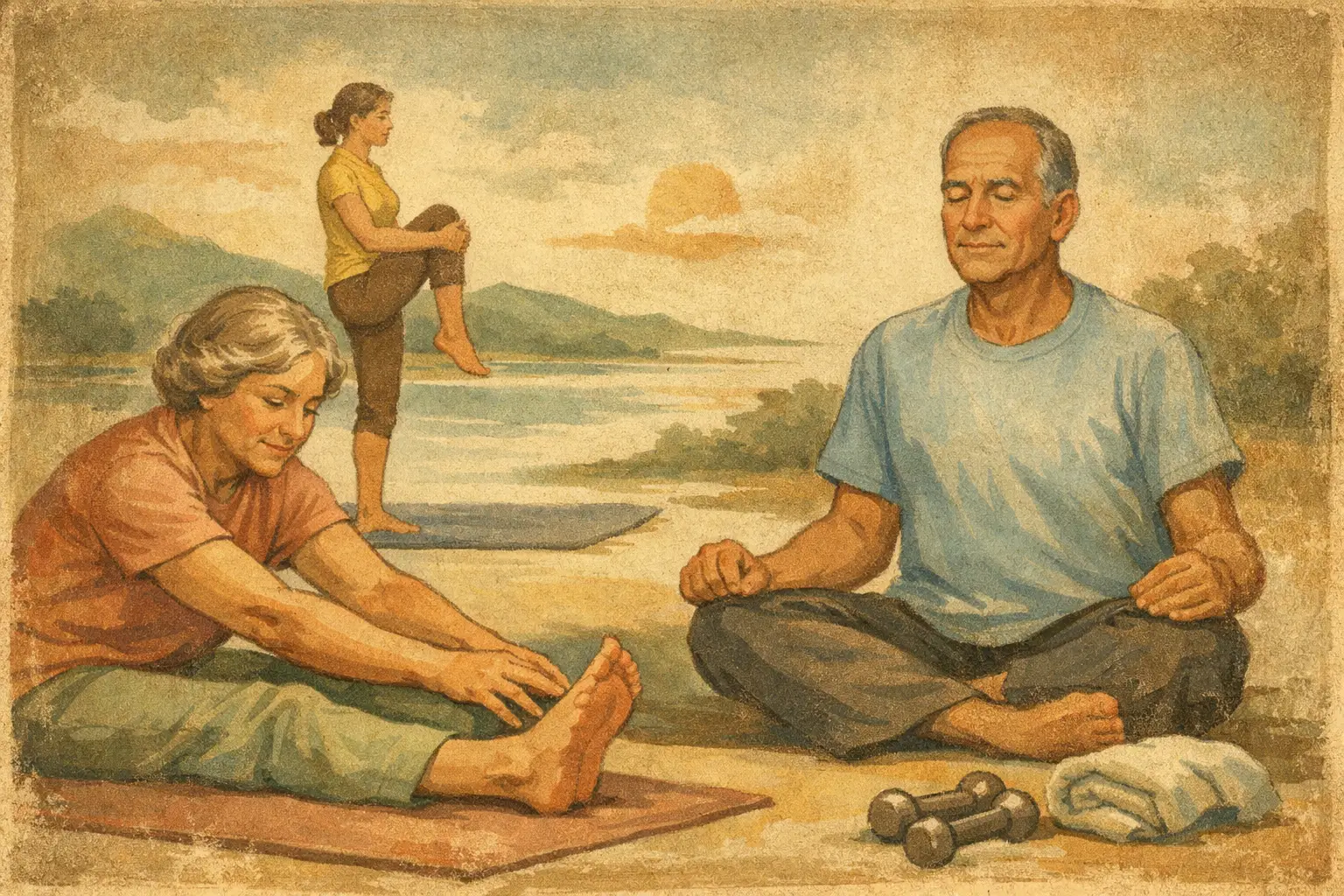
Pain can make movement feel like a risk. You may have tried to “push through” in the past and paid for it with a flare-up, or been told to exercise without anyone explaining what that should look like when your body is already struggling. The top exercises for chronic pain are not necessarily the hardest or sweatiest ones. They are the movements you can adapt, repeat and recover from without feeling punished by your own body.
There is no one exercise plan that works for every disabled person or every type of pain. Arthritis, fibromyalgia, back pain, long Covid, nerve pain, hypermobility and chronic fatigue can all change what feels manageable. The aim is not to force your body into somebody else’s idea of fitness. It is to protect your independence, support your mood and keep as much comfortable movement in your day as possible.
Start with a safer definition of exercise
Exercise can mean a short walk with your stick, two minutes of seated marching, gentle stretches before getting dressed, or a few movements in bed on a difficult day. It does not have to mean joining a gym, standing for half an hour or following a fast-paced online workout.
A useful rule is to begin below your limit, not at it. If you think you can manage ten repetitions, start with three or four. If a ten-minute walk seems possible, try five minutes and see how you feel later that day and the following morning. This is pacing: doing enough to give your body a regular signal of movement, without setting off the boom-and-bust cycle of doing too much then needing days to recover.
Some discomfort when you begin moving stiff muscles or joints can be normal. Sharp pain, new numbness, dizziness, chest pain, severe breathlessness, sudden weakness, or pain that keeps escalating are different. Stop and seek medical advice. If you have a new condition, recent surgery, unstable symptoms, or have been told to avoid certain movements, check with your GP, physiotherapist or relevant specialist before starting.
Top exercises for chronic pain: gentle options that adapt
Seated marching and ankle movements
Seated exercise is real exercise, and it can be a sensible starting point if standing affects your balance, fatigue or pain. Sit in a supportive chair with both feet on the floor. Slowly lift one knee a small distance, lower it, then change sides. Keep the movement as small as you need it to be.
You can add ankle pumps by lifting your toes while heels stay down, then lifting your heels while toes stay down. These movements can warm up the legs, maintain circulation and help you feel less stiff after sitting. Try one minute at first, with rests whenever you need them.
Gentle range-of-motion movements
When pain leads us to guard an area, the body can become more restricted and tense. Slow range-of-motion work is about reminding joints that they can move safely within their current limits.
For the upper body, roll your shoulders backwards, open and close your hands, or bend and straighten your elbows. For the neck, look gently left and right as though checking for traffic, without forcing the stretch. For hips and knees, slide one heel forwards and back while sitting or lying down.
Keep movements smooth and small. You are not trying to reach the furthest possible position. A comfortable range, done little and often, is more useful than one determined stretch that leaves you sore.
Short, supported walks or wheeling practice
Walking can support joint mobility, heart health, sleep and confidence, but it is only helpful when the dose suits you. A short route around your home, garden, block or local shop may be enough. Use the aids that help you walk safely. A stick, rollator, wheelchair, mobility scooter or a companion is not “giving in” - it is access to movement on your terms.
For wheelchair users, a short period of self-propelling, if it is comfortable for your shoulders, can be an option. So can practising turns, reaching your usual destinations efficiently, or taking a supported outdoor route. Shoulder pain is common for wheelchair users, so speak to an occupational therapist or physiotherapist if propulsion regularly hurts or you are unsure about your set-up.
The right amount may be two minutes, not twenty. Choose a distance that lets you return without needing to push through a major increase in symptoms.
Sit-to-stands for everyday strength
Standing up from a chair is a movement many of us need throughout the day. Practising it can build strength in the legs and help with everyday transfers, but it can be adapted in several ways.
Choose a firm chair with arms if available. Place your feet comfortably under you, lean forwards slightly and use your hands on the chair arms or another stable support. Stand only as far as feels safe, then sit down slowly. If standing fully is too much, practise the forward lean and lifting your weight slightly from the seat.
Start with one or two repetitions. That may sound small, but regular small practice counts. Avoid using a chair with wheels or a low, soft sofa that makes the movement less stable.
Wall press-ups or resistance-band pulls
Strength work matters because stronger muscles can make daily tasks less demanding. It does not need heavy weights. Wall press-ups are a gentle way to work the chest, arms and shoulders: stand facing a wall, place your hands on it, bend your elbows slightly and press back. Move your feet closer to the wall to make it easier.
A light resistance band can also be useful for seated rows. Hold the band securely, with it anchored safely or looped around your feet if advised, then gently draw your elbows back. Do not hold your breath or pull through shoulder pain. For people with hypermobility, controlled, smaller movements are often safer than stretching or locking joints at the end of the range.
Water-based movement, where it is accessible
Warm-water exercise can reduce the feeling of body weight on painful joints and may help some people move more freely. That could mean walking in the shallow end, gentle leg movements while holding the side, or a quiet aqua class that welcomes different abilities.
It is not right for everyone. Changing rooms, steps, sensory overload, travel, temperature changes and post-exertional symptoms can make swimming pools inaccessible or simply not worth the cost to your energy. If water helps, brilliant. If it creates more barriers, you have not failed - choose an option that fits your real life.
How to judge whether an exercise is helping
Pain levels are only one part of the picture. Notice whether you can get out of bed a little more easily, stand to make a drink with less effort, feel less stiff after sitting, or have a better sense of control over your day. These are meaningful gains.
A simple note on your phone or a piece of paper can help. Record what you did, how long you did it, your pain and fatigue beforehand, and how you felt later and the next day. Over a couple of weeks, patterns usually become clearer. You might find that morning stretches help, while an afternoon walk worsens fatigue, or that every-other-day strengthening works better than daily sessions.
If symptoms rise mildly but settle within a reasonable time for you, you may be able to keep the same level until it feels easier. If pain or fatigue is significantly worse for more than a day or two, reduce the time, repetitions or intensity next time. Progress is rarely a straight line, particularly during stress, poor sleep, illness or changes in medication.
Make movement fit around disability, not against it
Set-ups matter. Supportive footwear, a stable chair, clear floor space, a heat pack before moving if it helps you, and a planned rest afterwards can all make exercise more manageable. Some people prefer a timer because it stops them doing too much on a good day. Others do better tying movement to a routine, such as ankle pumps while the kettle boils or shoulder rolls after using the loo.
You also deserve exercise spaces where you are not stared at, rushed or made to justify your needs. Ask a class instructor whether they can offer seated alternatives, extra rest breaks or a quieter place in the room. You do not have to disclose every detail of your health to ask for an adjustment.
On low-capacity days, the goal may be maintaining comfort rather than building fitness. One deep breath, a position change, or a few hand movements may be all that is available. That still counts. Chronic pain already asks a great deal of you. Movement should be one small form of support, not another test you are expected to pass.
If you are unsure where to begin, bring these ideas to a GP, physiotherapist or pain clinic and ask for a plan based on your symptoms and goals. Start gently, listen honestly, and let your version of progress be enough.