
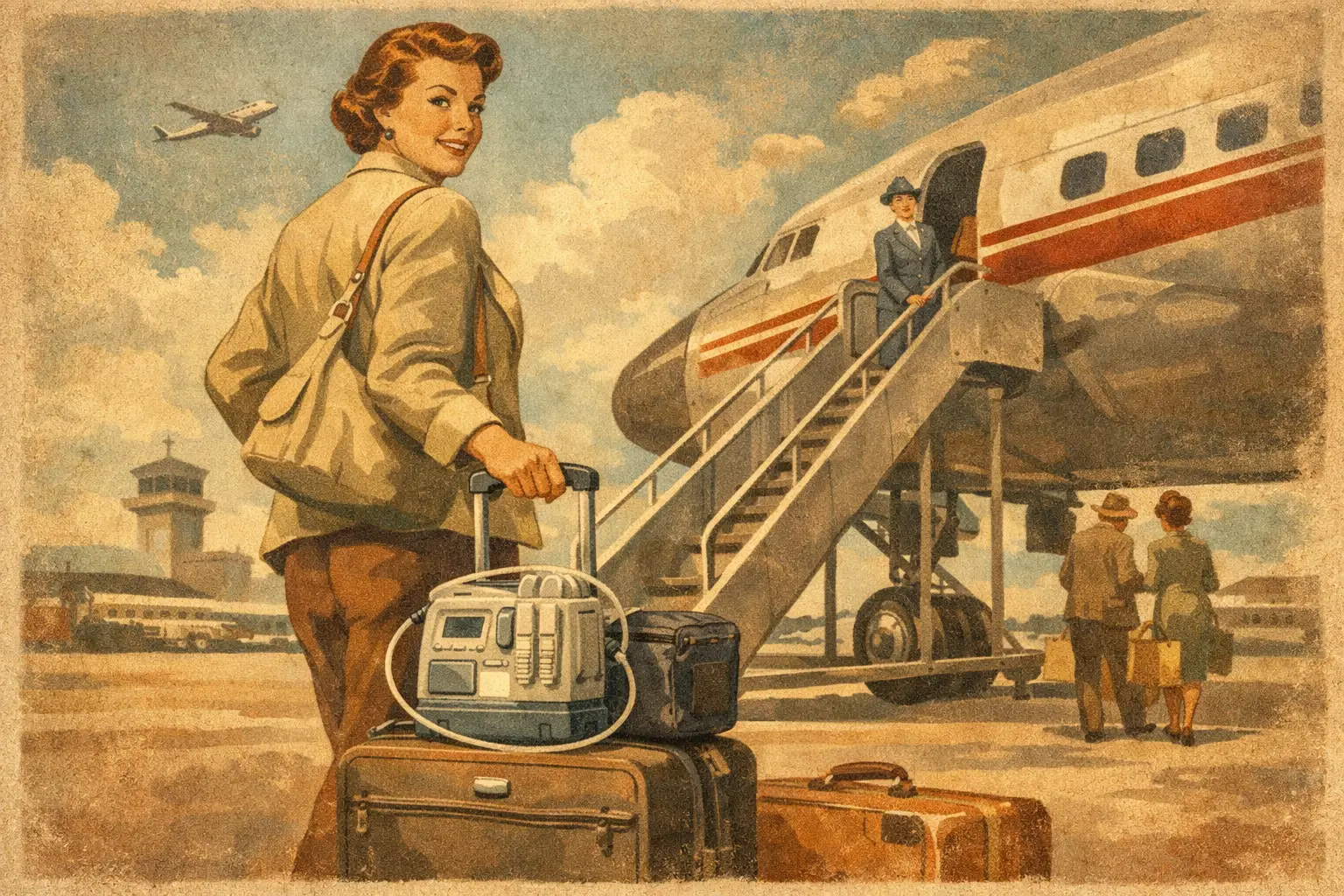
A holiday should not begin with worrying whether your equipment will make it through check-in, whether there will be a plug socket by the bed, or whether somebody will mistake a vital device for ordinary luggage. Travelling with medical equipment takes more preparation, and that can feel unfair when you are already managing your health. But a clear plan can take a lot of the pressure out of the journey.
The aim is not to plan for every imaginable disaster. It is to make sure the things you rely on are protected, powered, documented and close enough to reach when you need them.
Start planning before you book
Your needs should shape the journey, rather than you trying to fit around a journey that does not work for you. Before booking, think honestly about what your equipment needs: battery power, a mains socket, refrigeration, space, a quiet area, a particular seating position, or help moving through an airport or station.
This matters especially if you use oxygen, a CPAP machine, a nebuliser, a feeding pump, suction equipment, a mobility aid or equipment that needs regular charging. Different airlines, train operators, ferry companies and cruise providers have different rules. Never assume that because an item was accepted on one trip, it will be accepted everywhere.
For flights, contact the airline before booking where possible, then again once the booking is confirmed. Ask whether your device is permitted in the cabin, whether it needs prior approval, what battery rules apply, and whether the airline requires a medical form or a fit-to-fly letter. Some equipment can be used during a flight, while other items may only be carried but not operated. That distinction matters.
It is also worth checking the practical detail that brochures rarely mention. Is the hotel room accessible for you, not just labelled accessible? Is there a working socket beside the bed? Can staff provide a fridge for medicines if the room does not have one? If you need deliveries of feed, oxygen or other supplies at your destination, speak to your provider and accommodation well in advance.
Keep essential equipment with you
If an item is essential to your health, safety or day-to-day function, treat it as cabin baggage or hand luggage wherever rules allow. Do not put it in a checked suitcase simply because it is awkward to carry. Hold baggage can be delayed, damaged or sent to the wrong place, and you should not be left without something you need to breathe, communicate, eat, sleep or manage pain.
Keep medicines, chargers, spare parts, paperwork and a small supply of consumables with the equipment. A sensible rule is to pack enough supplies for the journey, plus extra for delays. How much extra depends on the trip and the item, but a one-night delay should not leave you without filters, masks, tubing, batteries, catheters or feed-related supplies.
Use a clearly labelled bag that is easy to identify. It can help to place a short note inside explaining what the equipment is, what it is used for and who to contact in an emergency. This is not about having to justify yourself. It simply gives staff or travelling companions useful information if you are too tired, unwell or overwhelmed to explain.
Make a simple equipment list
Before leaving home, write down the model name, serial number if relevant, supplier contact details and any settings you may need to share with a clinician or technician. Take photographs of the device and its accessories. If something goes missing or is damaged, those details can make a stressful conversation much easier.
Also separate what is irreplaceable from what is inconvenient to replace. Your essential device, custom mask, power lead and prescription should not all be packed in different places or buried at the bottom of a case.
Batteries, power and charging need a proper plan
Battery questions can be one of the most confusing parts of travelling with medical equipment. Airlines often have specific rules about lithium batteries, particularly spare batteries and higher-capacity power packs. Some must be carried in the cabin rather than placed in the hold, and terminals may need to be protected from short-circuiting.
Check the battery's watt-hour rating, usually shown as Wh, and ask the airline about its policy for your exact device and any spare batteries. Get the answer in writing if you can. A staff member at the airport may not immediately recognise specialist equipment, so having the manufacturer's information and airline approval to hand can save time.
Do not rely on a seat socket on a plane, train or coach. They may not be available, may not work, or may not provide enough power for your equipment. Plan as though you will need to manage independently for the full journey, including delays. If your device runs from mains electricity, take the correct adaptor for your destination and a spare charging lead where possible.
For overnight stays, check whether there is a backup plan if there is a power cut. This may be as simple as ensuring your battery is fully charged each evening, but for some people it will mean discussing alternatives with a healthcare professional before travel.
Bring useful paperwork, but do not rely on one letter
A brief letter from your GP, consultant or relevant clinical team can be helpful. It should state that you travel with the device or medicine, what it is for, and any key requirements. A prescription copy can also help, especially when carrying medication, liquids, sharps or nutritional products.
However, a letter is not a universal pass. Security staff, airlines and border authorities may still follow their own procedures. Be ready to explain your equipment calmly and allow extra time. If you are concerned about screening, you can ask staff what will happen before it starts and tell them if handling or disconnecting the equipment could cause pain, damage or a medical problem.
Keep paperwork in your hand luggage, with a digital copy stored securely on your phone if that works for you. Include travel insurance details and the contact number for your equipment supplier. If you are travelling abroad, check whether your insurance covers your condition, your equipment and replacement hire costs. Cheap cover that excludes the thing you most need is rarely good value.
Ask for assistance without apologising
Special assistance is there because airports and transport systems can be physically demanding, not because you have failed to cope. Book it ahead, explain what help you need and be specific. You may need support through the airport, help with bags, additional time at security, early boarding, a suitable seat, or assistance transferring between platforms.
It is useful to remember that special assistance and permission to carry or use medical equipment are often handled separately. Arrange both. Being booked for wheelchair assistance does not automatically mean an airline has approved a powered device or oxygen concentrator.
If you are travelling with another person, agree in advance who is responsible for what during the journey. They may carry a spare bag while you manage your device, or they may need to know how to find your emergency information. But do not assume they will understand the routine without talking it through. Travel days are tiring, and clear expectations prevent avoidable tension.
Build in room for delays and bad days
The best travel plans leave space for reality. Arrive earlier than the standard advice suggests, particularly if security may need to inspect equipment. Avoid tight connections where possible. A cheaper route with two rushed changes may cost more in energy, pain and anxiety than a direct option.
Think about the first few hours after arrival too. If your equipment has been packed, charged and carried all day, you may not have the energy for a late supermarket trip or a long walk to find food. Arrange transport, check-in and essentials so that you can rest once you arrive.
There is no prize for pushing through when your body is telling you the plan is too much. If a journey needs a stopover, accessible taxi, extra night near the airport or a companion, that is not being difficult. It is making travel possible on terms that respect your health.
A final check before you leave
The day before travel, charge every battery, test the device, pack leads and adaptors, and check that your essential supplies are in hand luggage. Confirm assistance bookings and keep the relevant phone numbers easy to find. Then take a breath.
You deserve to travel without being made to feel like your needs are an inconvenience. Preparation will not remove every bump in the road, but it gives you more choices when plans change - and that breathing room can make all the difference.