
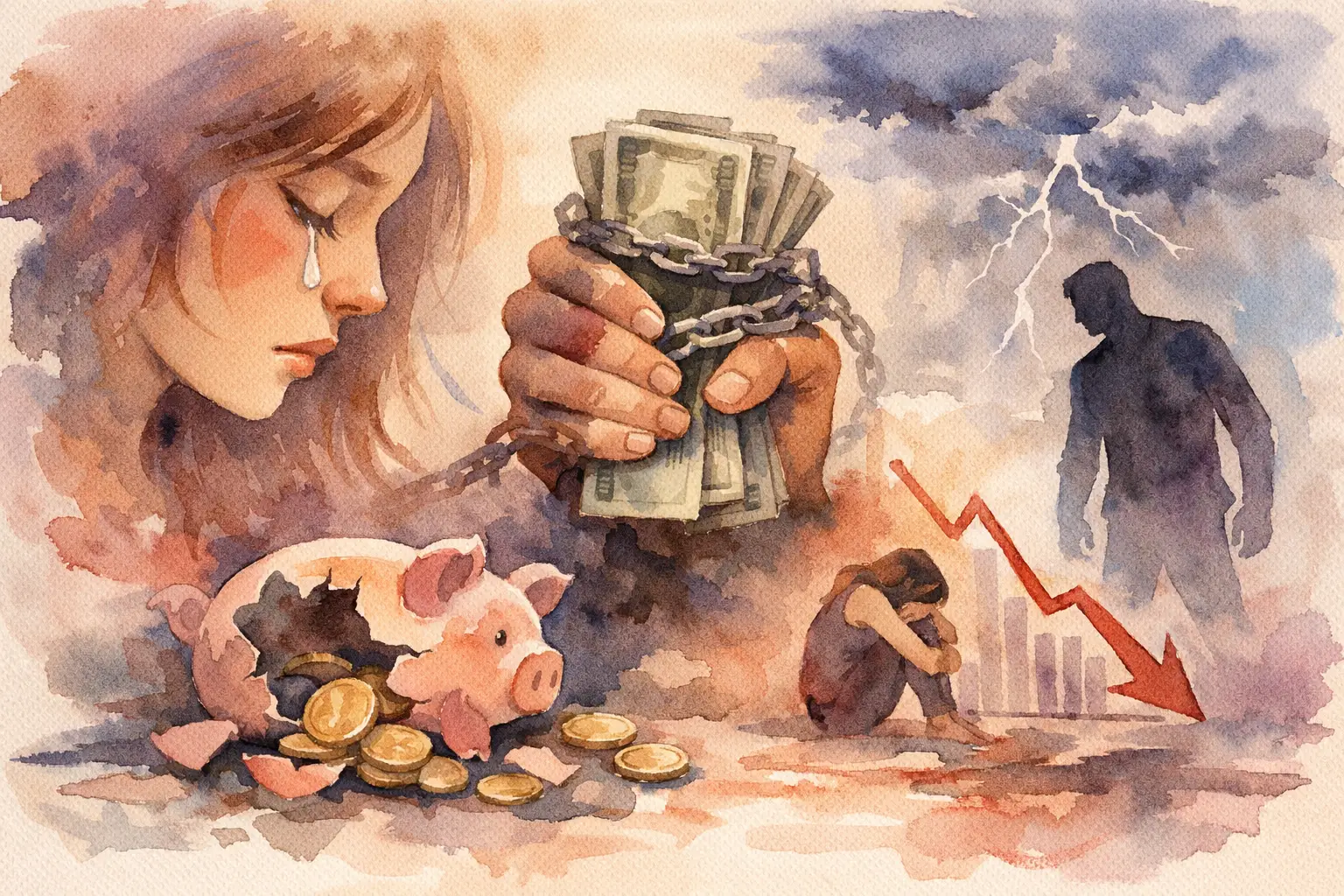
Money arguments happen in plenty of relationships. Financial abuse is different. If someone is controlling your benefits, wages, bank account, spending, or access to basic essentials, those warning signs of financial abuse should never be brushed off as just being "careful with money" or "helping out".
For disabled people, this can be especially hard to spot and even harder to talk about. You might rely on someone for care, transport, paperwork, shopping, or support with phone calls and online forms. That can blur the line between support and control. If something feels off, you are not overreacting.
What financial abuse can look like
Financial abuse is about power. One person uses money, debt, benefits, property, or everyday spending to control another person. It can happen in a romantic relationship, within families, from an adult child, a parent, a carer, or someone who says they are helping you manage things.
It does not always look dramatic from the outside. Sometimes it starts with small things that are easy to explain away. Someone insists on "keeping things simple" by holding your bank card. They want to sit beside you every time you check your online banking. They tell you not to "waste money" on taxis, aids, food, heating, or social plans. Over time, your choices shrink and their control grows.
Disabled people can be at particular risk where benefits are involved. A person may pressure you to hand over PIP, Universal Credit, ESA, or other income, claiming it is only fair because they help you. In some cases, they may take money intended for your care or daily living needs and use it for themselves.
12 warning signs of financial abuse
One sign on its own does not always tell the whole story. A pattern matters. So does the impact on you.
1. They control your bank account or card
If someone keeps your card, knows all your passwords, or will not let you access your own money privately, that is a serious concern. Support should increase your independence, not remove it.
2. They pressure you to hand over benefits or wages
You may be told that because you live with them, because they care for you, or because they "do everything", they are entitled to most or all of your income. Shared household costs can be discussed fairly. Pressure, guilt and fear are something else.
3. You have to ask for basic things
If you are having to ask permission for food, medication costs, toiletries, phone credit, mobility needs, or heating, the problem is bigger than budgeting. Nobody should be treated like a child because they need support.
4. They monitor every penny you spend
Some couples keep a close eye on money together, especially when times are hard. But if one person demands receipts, quizzes you on every purchase, or punishes you for spending on essentials, that crosses a line.
5. They build debt in your name
This can include loans, credit cards, catalogues, phone contracts, or buy now pay later accounts opened or used without your proper agreement. Sometimes the person says they will "sort it later". Meanwhile, the debt and the stress sit with you.
6. They stop you working or studying
Financial abuse is not only about taking money that already exists. It can also be about blocking your chance to earn, train, volunteer, or become more independent. They may tell you that you are too unwell, too incapable, or that it is not worth trying.
7. They use your disability against you
This can sound like, "You cannot manage money anyway," or "No one will believe you over me." That kind of language is meant to undermine confidence and keep you dependent.
8. They keep financial information from you
Bills arrive and you are not allowed to see them. Letters go missing. You are told not to worry about the rent, council tax, benefits, or debts because they are "dealing with it". If your name is involved, you have a right to know.
9. They take payment meant for your care or daily living
If money intended for support, transport, equipment, or extra living costs is regularly diverted elsewhere, that is a major warning sign. This includes direct payments or benefits being used in ways that leave you without what you need.
10. They threaten to withdraw care or support over money
This is one of the clearest warning signs of financial abuse. A person might say they will not help you wash, get to appointments, collect prescriptions, or assist with forms unless you give them money or financial control.
11. You are left without enough for essentials
Even if someone says they are managing your money for your own good, the result matters. If you are going without food, electricity, heating, data, sanitary products, or suitable clothing while they decide where the money goes, something is badly wrong.
12. You feel frightened to bring money up
That fear tells you something. If asking about your own money leads to shouting, sulking, intimidation, blame, or threats, you are not in a fair arrangement.
Why disabled people are often told this is "normal"
A lot of people experiencing abuse question themselves first. That doubt can be even stronger when disability is part of the picture.
You may have been made to feel grateful for help, even when that help comes with strings attached. You may worry that if you challenge things, people will say you are confused, unwell, vulnerable, or incapable. If the person is also your carer, partner, family member, or appointee, the situation can feel tangled very quickly.
There is also a practical problem. Many disabled people are already dealing with exhausting systems, limited energy, pain, isolation, inaccessible services, and worry about losing the support they do have. Abuse often thrives in that gap. It depends on you feeling too drained, too ashamed, or too stuck to question it.
None of that makes it acceptable.
What to do if these warning signs of financial abuse feel familiar
Start with safety, not confrontation. In some situations, directly accusing the person can make things worse, especially if you depend on them day to day. It depends on your circumstances, your level of risk, and whether you have another safe person involved.
If you can, begin keeping a private record. Note dates, amounts, missing money, threatening messages, debts you did not agree to, or times you were denied essentials. Keep this somewhere the person cannot access if possible.
Try to gather copies of important documents when it is safe to do so. That might include bank statements, benefit letters, tenancy documents, debt letters, ID, and account details. If online access is monitored, be careful. Using a trusted device or getting support in person may be safer.
If you have your own account, think about whether you can set up a new secure password or move some money into an account only you can access. But this is not always simple. If the person sees all your post, checks your phone, or controls transport, getting advice first may be wiser.
Talking to someone outside the situation can make a huge difference. That might be a trusted friend, support worker, GP, social worker, domestic abuse service, safeguarding team, or a disability-focused advice space like Talking Really where the issue will be understood without judgement. If children or dependent adults are involved, or if you are at immediate risk, urgent support matters.
If the person says they are only helping
This is where many people get stuck. Plenty of disabled people do want or need practical support with money. There is nothing wrong with that. The question is whether the support is transparent, agreed, and in your best interests.
Helpful support should leave you informed. You should know what money is coming in, what is going out, and why. You should be able to ask questions without being punished. You should not be frightened, deprived, humiliated, or shut out.
Even where someone genuinely started out helping, things can still become controlling. Motives matter less than impact. If the arrangement leaves you with less freedom, less dignity, and less access to your own life, it needs looking at.
You do not need to prove it is "bad enough"
One of the cruellest parts of financial abuse is how often people minimise it. They tell themselves nobody has hit them, so maybe it does not count. Or they think because the person also does some caring, the situation is too complicated to name.
Real talk - abuse does not have to fit someone else's neat definition before you are allowed to seek help. If your money is being controlled in a way that keeps you frightened, dependent, or unable to meet your needs, that matters.
You are allowed to ask questions. You are allowed to want privacy. You are allowed to expect support without exploitation. And if something has felt wrong for a while, this can be the moment you stop explaining it away and start taking your own side.