
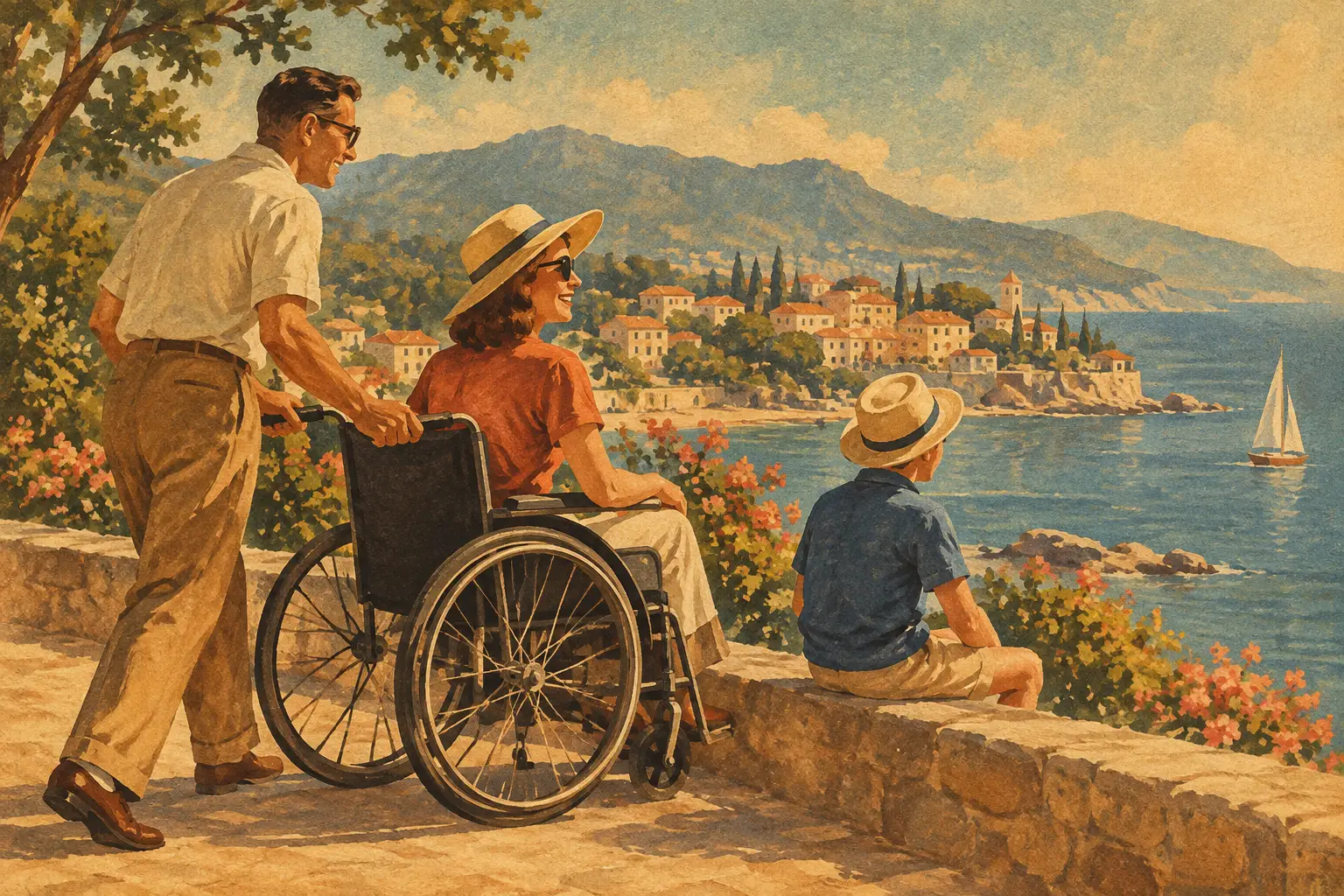
A holiday should not begin with a battle to find out whether you can get through the front door, use the loo or sleep safely. Yet for many disabled people, accessible holidays involve hours of chasing answers that should have been clear from the start. The aim is not to lower your expectations. It is to plan a break around your actual needs, so you have more energy for the bit that matters: being away.
Start with your non-negotiables
Before choosing a destination, write down what makes a trip possible rather than merely appealing. This is not being demanding. It is a sensible way to avoid arriving somewhere that is described as accessible but does not work for you.
For some people, step-free entry and a level-access shower are essential. For others, the biggest issue may be access to oxygen, a fridge for medication, a quiet room, space for a mobility scooter, an assistance dog, a nearby pharmacy or a place to rest between activities. Someone with chronic pain or fatigue may need a short journey and flexible check-in more than a hotel with a long list of facilities.
Be specific about the details. “Wheelchair friendly” can mean a ramp at the entrance but a bathroom you cannot turn around in. “Ground floor” does not always mean step-free. “Near the beach” might mean a steep hill, loose shingle and no accessible toilet for miles.
It can help to split your list into three parts: what must be in place, what would make the holiday easier, and what would be a nice extra. That makes decisions less overwhelming when no option is perfect.
Ask questions before you book
Photos and booking filters are useful starting points, but they cannot tell you everything. Contact the accommodation directly and ask practical questions based on how you move through a space. If speaking on the phone is difficult, ask for answers by email or message so you have a record.
Ask about the route from parking or drop-off to reception, not just whether there is parking. Check the width of doorways, whether the shower has a fixed or portable seat, the height of the bed, and whether there is enough clearance on the side you transfer from. If you use a hoist, ask whether one is provided, what type it is, its safe working load and whether it will fit around the bed.
Also ask whether accessibility equipment is available throughout your stay or is shared between rooms. A shower chair promised “on request” is not much help if another guest has it first. If you have sensory needs, ask about noise, lighting, crowds, music in communal areas and whether a quieter room is possible.
A good provider will answer clearly and without making you feel awkward. Vague replies, such as “we have never had a problem before”, are a warning sign. Your needs do not become less real because somebody else’s were different.
Check the journey door to door
Transport is often where a manageable holiday becomes exhausting. Think beyond the main train, flight or ferry. Include getting to the station or airport, changing platforms, reaching your accommodation, and travelling home when you are more tired than when you left.
Rail assistance can make journeys far more manageable, but booking it does not remove every risk. Allow extra time, keep key details handy and have a back-up plan if assistance is delayed. If you are travelling with a wheelchair or scooter, check size and weight limits for each part of the journey, including taxis and local transport.
For flights, tell the airline about any mobility equipment and support you need as early as possible. Battery rules for powered wheelchairs and scooters vary, particularly for lithium batteries. Take photographs of your equipment before you travel and keep information about its make, model and handling requirements with you. It is not pessimistic to prepare for damage or delay. It is protecting something you rely on.
Driving can offer more control, especially when your energy varies, but it brings its own questions. Is there accessible parking at the accommodation? Are there motorway services at sensible intervals? Will you need a second driver? Could a long journey be broken up with an overnight stop?
Build rest into the plan, not around it
Many people have learned to push through symptoms because they do not want to disappoint anyone. Holidays can make that pressure worse. You may feel you have spent money, organised care or persuaded family to come along, so you “should” make every day count.
But a good holiday is not measured by how many attractions you manage. It might be a late breakfast, an accessible garden, an afternoon nap and one enjoyable outing. That still counts. In fact, it may be exactly what you needed.
Choose accommodation where resting is genuinely comfortable. If possible, avoid a setup where the only place to sit is a hard dining chair or where you have to travel back across town every time you need a break. A self-catering cottage or flat can give more control over meals, medication, routines and quiet time. A hotel can be easier if cooking and cleaning would take too much out of you. The best choice depends on what creates work and what removes it.
When travelling with family or friends, talk about pace before you go. Agree that people can split up for an afternoon without it becoming a row or a guilt trip. A companion may want to visit a busy attraction while you recharge, then meet later for dinner. Independence does not have to mean doing every activity together.
Plan support without losing your freedom
If you need personal assistance, medication prompts or help with transfers, holidays require more planning. Check whether your usual support can travel with you, what funding rules apply, and whether the accommodation can safely accommodate both of you. If you are arranging support at your destination, confirm experience, availability, costs and contingency arrangements in writing.
Take more medication and supplies than you expect to need, keeping essential items in hand luggage or with you rather than in a vehicle boot. Bring copies of prescriptions, a short summary of your medical needs and emergency contact details. For complex conditions, it may help to make a simple one-page document explaining what to do if you become unwell. Keep it plain and practical.
This is also worth discussing if you are travelling with someone who supports you informally. Partners, relatives and friends can be brilliant, but they need breaks too. Be honest about what they can realistically do and whether there are points where paid support, accessible transport or a smaller itinerary would make the trip better for everyone.
Budget for reality, not the brochure price
Accessible travel can cost more, and that is unfair. A suitable room may be more expensive, accessible taxis may be limited, and extra nights can be necessary to make a journey safe. Build those costs in from the beginning where you can, rather than booking the cheapest option and hoping it works out.
At the same time, expensive does not automatically mean better. Some smaller UK stays offer thoughtful, well-described access and flexible hosts, while a large resort may use accessibility as a marketing label without getting the basics right. Read recent reviews with care, especially those written by people with similar access needs. What felt spacious for one person may not work for a powered chair; what felt quiet for one guest may still be overwhelming for another.
Consider travel insurance early, particularly if you have a pre-existing condition. Answer medical questions honestly, read what is covered and ask about cover for mobility equipment, medication and cancellations caused by a change in health. The cheapest policy is not always the one that will help when you need it.
When something goes wrong
Even well-planned accessible holidays can go off course. A lift breaks down. A room is not what was promised. Your condition flares. The key is to give yourself permission to change the plan.
Raise problems straight away and keep notes, photos and copies of messages. Ask for a practical solution, such as a different room, a ramp, a shower seat, a refund for an unavailable facility or help arranging accessible transport. If the issue affects your safety, do not feel pressured to “make do”.
Most importantly, do not judge yourself if you need to come home early, cancel an outing or spend a day in bed. Disabled people are too often expected to prove we are easy-going guests before anyone will take our needs seriously. You deserve a break that meets you where you are.
A holiday does not need to look impressive online to be worthwhile. If you return feeling a little more rested, a little more connected or simply pleased that you got away on your own terms, that is a real win. Ready to talk about the practical stuff that travel brochures leave out? You are not alone in working it out.