
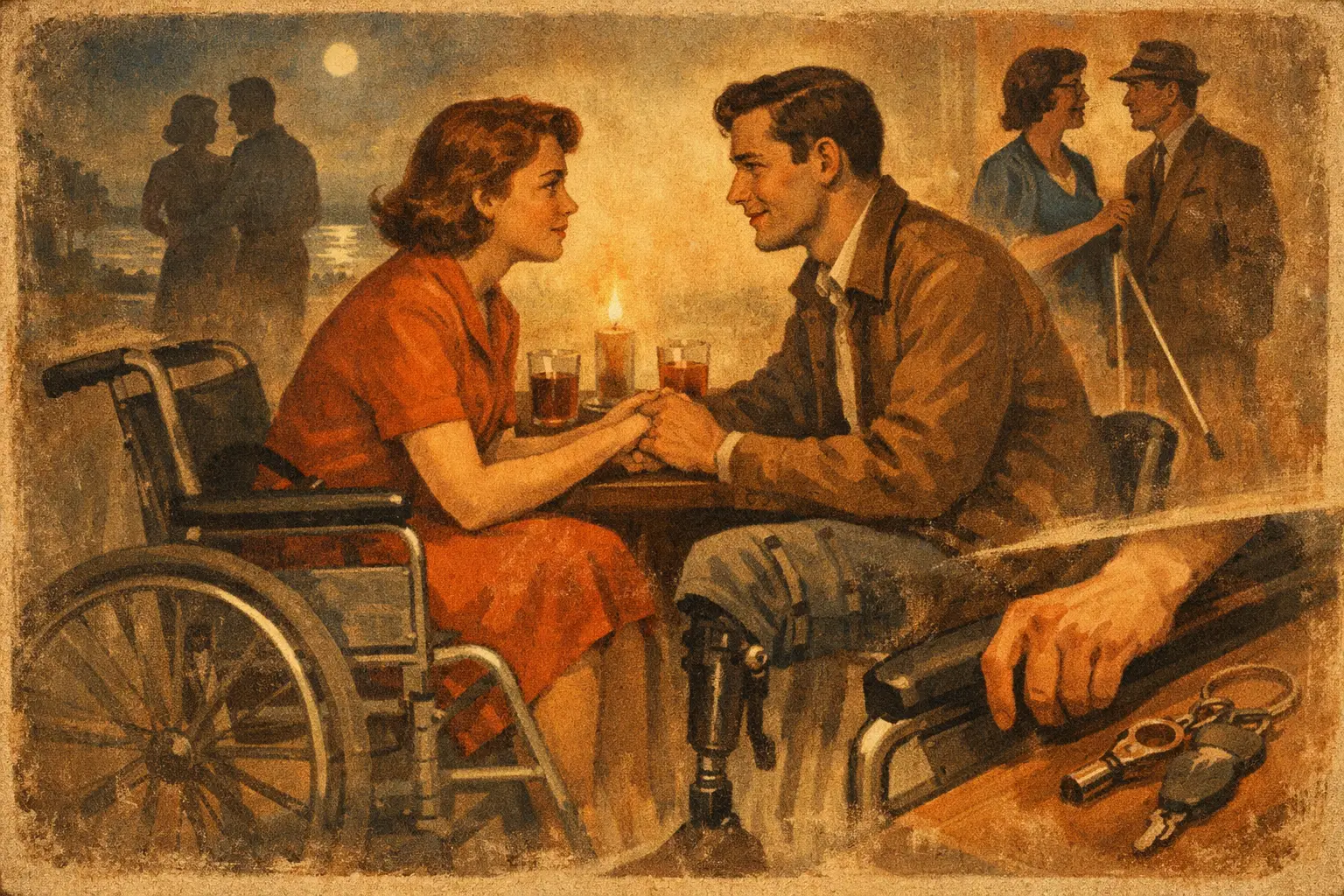
A first date can go wrong in ways that have nothing to do with romance. Sometimes it is the restaurant with a step at the door nobody mentioned. Sometimes it is a person who seems charming online but gets controlling the moment your access needs come up. That is why disabled dating safety stories matter. They are not gossip, scare stories or a reason to stop putting yourself out there. They are one of the clearest ways to learn what safer dating actually looks like in real life.
For many disabled people, dating advice is either painfully generic or quietly built around non-disabled assumptions. It tells you to “just meet for coffee” without thinking about transport, pain, fatigue, hearing, communication support, medication timing, carers, toilet access or what happens if your date treats your disability as a curiosity. Real safety is not only about avoiding the worst-case scenario. It is also about protecting your dignity, your energy and your right to leave a situation that does not feel right.
What disabled dating safety stories really show
When people share their experiences honestly, a pattern appears. Safety problems do not always start with obvious danger. They often begin with small moments that are easy to brush off. A date insists on changing the venue last minute, even after you explained why the original place worked. Someone keeps asking invasive medical questions and laughs them off as interest. A person offers help you did not ask for, then acts offended when you say no.
None of those things automatically mean somebody is unsafe. But they do tell you something useful about respect. A lot of disabled dating safety stories are really stories about whether someone listens, believes you and accepts that your needs are not up for debate.
There is a difference between awkwardness and risk, and it helps to name it. Some people simply do not know much about disability and can learn quickly if they are decent and open. Others use that same lack of understanding as cover for entitlement, control or fetishising behaviour. The difficult bit is that both can sound clumsy at first. The difference usually shows up when you set a boundary.
The early red flags people often miss
Many disabled adults have spent years being expected to explain themselves politely. That can make dating red flags harder to trust. If you are used to having your needs questioned by strangers, professionals or even family, you may second-guess your own reactions when a date does the same.
One common story is the person who seems keen until access needs are mentioned. They become vague, irritated or overly dramatic, as if basic planning is a burden. Another is the date who pushes for private meetings too quickly. They may frame it as convenience, especially if travelling is hard for you, but safer dating usually starts with public places and clear arrangements.
Then there is oversharing in reverse. Some people want your full diagnosis, trauma history or care setup before they have earned any trust at all. Curiosity is not always harmless. If someone treats your disability like content for their own interest rather than part of your life to be respected, that is worth paying attention to.
A red flag can also look flattering at first. Being told you are “inspiring”, “brave” or “amazing despite everything” may seem kind, but it can signal that the person is focused more on their own feelings about disability than on getting to know you. It depends on tone, context and whether they actually see you as a whole person.
Disabled dating safety stories about public meet-ups
A lot of the most useful stories are about first meetings that were technically public but still not safe enough. Public does not always mean accessible, easy to leave or emotionally comfortable.
For example, meeting in a crowded place can be sensible, but not if noise makes communication impossible, if there is no step-free access, or if your energy drops quickly and there is nowhere quiet to sit. Likewise, a daytime meet-up can feel safer than evening, but not if transport home is unreliable or you are left stranded because your date ignored the timing you agreed.
The lesson here is simple. Safety planning should include your disability, not be added as an afterthought. A good date does not just accept that. They help make it easier.
That might mean agreeing a venue in advance and not changing it last minute. It might mean choosing somewhere near a station with accessible toilets. It could mean telling a trusted friend where you are, keeping your mobile phone charged and arranging your own way home where possible. None of this is overreacting. It is practical.
When help turns into control
Some of the most unsettling dating stories involve “help” that becomes pressure. A date insists on pushing your wheelchair without asking. They order for you. They speak to your support worker or friend instead of to you. They offer lifts, then act as though you owe them more time, attention or gratitude because they were “doing a favour”.
This matters because disabled people are often told to be grateful for help, even when it crosses a line. Dating should not work like that. Support offered respectfully can be lovely. Support used to create obligation is not care. It is control.
One useful rule is this: if somebody gets angry, sulky or mocking when you decline help, the problem is not your boundary. The problem is their reaction. Disabled dating safety stories often make this point very clearly. Unsafe behaviour is not only physical threat. It can be coercion, guilt or repeated disregard for your autonomy.
Online dating brings its own risks
Dating apps and social media can be a lifeline, especially if isolation, transport or fluctuating health make meeting people harder. But the same spaces can attract deception, harassment and fetishising behaviour.
A common story is somebody who seems thoughtful online, then becomes fixated on your body, mobility aid or diagnosis. Another is the person who claims to be understanding but starts testing boundaries through constant messaging, sexual comments or demands for photos. There are also financial risks. If someone quickly moves into sob stories, asks for money or wants access to your personal details, trust your instincts.
It helps to take your time. Video calls before meeting can reveal a lot. So can noticing whether the person respects delays in replying, understands that your health may affect plans and does not punish you for having limits. You do not need to hand over every detail of your life to prove you are genuine.
What safer dating can look like in practice
The best disabled dating safety stories are not only about what went wrong. They also show what right feels like.
It looks like someone asking what would make a meet-up work for you, without making it a big performance. It feels calm rather than intense. Plans are clear. Boundaries are heard the first time. If something needs adjusting, there is a conversation, not a guilt trip.
Safer dating also means giving yourself permission to leave early, cancel, change your mind or say no without a courtroom-level defence. You do not have to stay because the person travelled far, booked a table or seemed nice online. You do not need a dramatic reason to protect yourself.
If you have been isolated for a long time, even poor treatment can feel better than loneliness for a moment. That is not a moral failing. It is human. But it does mean extra care is needed, because people who are controlling can spot loneliness and play on it.
Why sharing stories matters without blaming anyone
There can be shame around bad dating experiences, especially when disability is involved. People may ask why you went, why you trusted them, why you did not leave sooner. That kind of questioning helps nobody.
Sharing disabled dating safety stories should not be about blaming the person who was let down, pressured or frightened. It should be about making patterns visible. Once those patterns are easier to spot, they are easier to act on.
That is one reason community spaces matter. Hearing other disabled people talk plainly about dating can cut through a lot of self-doubt. You realise that what felt “small” at the time was actually disrespectful. You also hear hopeful stories where someone handled things well, listened properly and made safety feel normal rather than awkward. Talking Really exists for those kinds of honest conversations.
Trust yourself, even if you are still learning
You do not need to become cynical to date more safely. You just need to take your own comfort seriously. If a person makes you feel rushed, tested, patronised or beholden, pay attention. If they make room for your needs without making you feel difficult, pay attention to that too.
The point of disabled dating safety stories is not to make dating feel frightening. It is to make it clearer. Real talk helps. So does remembering that the right person will not treat your safety, access or boundaries as an inconvenience. They will treat them as part of getting to know you properly.
You are allowed to want connection and still be careful with yourself. Those two things belong together.