
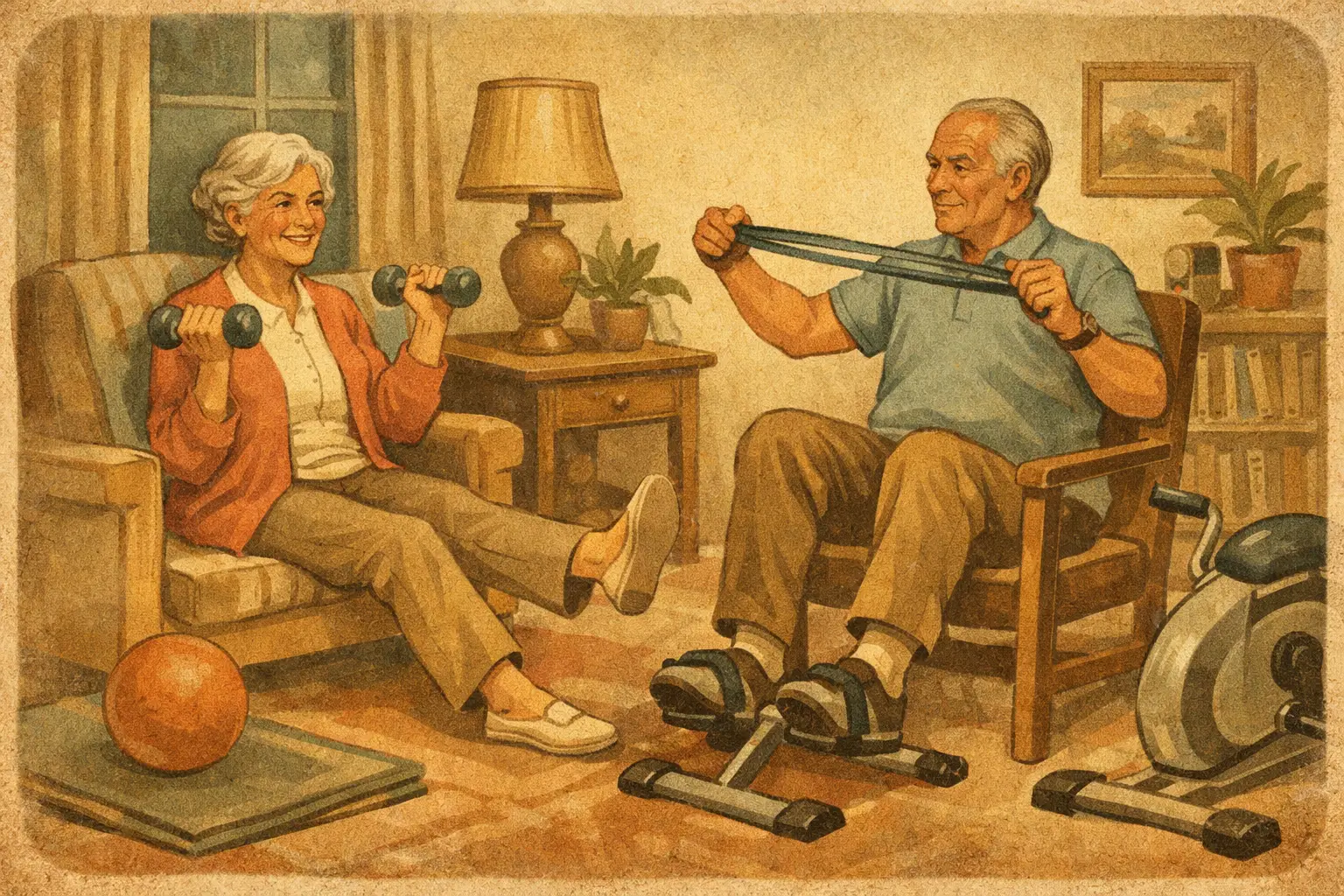
A workout does not have to mean getting on the floor, joining a class, or pushing through pain to count. The best exercise ideas for limited mobility are the ones that work with your body, your energy and the space you have today. For some people that may be five minutes in a chair. For someone else, it may be gentle movement in bed on a difficult morning. Both are real movement, and both can be worthwhile.
If you are disabled, living with pain, fatigue, breathlessness, balance problems or a long-term condition, exercise advice can sometimes feel like it was written for somebody else. You do not need to earn the right to start small. The aim is not punishment, weight loss or keeping up with anyone online. It is to find movement that feels safe, manageable and useful in your own day-to-day life.
Start with safety, not pressure
Before trying a new activity, think about what tends to make your symptoms worse and what helps you recover. If you have been advised to avoid certain movements, have recently had surgery, experience chest pain, severe dizziness, new weakness, or your condition is changing, speak to your GP, physiotherapist or relevant clinician first. They can help you work out what is appropriate for you.
For many people, a helpful rule is to stay within a comfortable effort level. You might notice your muscles working or your breathing becoming a little quicker, but you should still be able to speak in a short sentence. Stop if you feel sharp pain, faintness, unusual breathlessness or symptoms that worry you. Pain and exhaustion are not badges of honour.
It can also help to plan around your energy. If mornings are your best time, that may be when a short session fits. If fatigue is unpredictable, try one or two movements while the kettle boils or during a television break. Pacing is part of exercise, not a failure to exercise.
Seated exercise ideas for limited mobility
A sturdy chair with arms or a firm dining chair can be enough to get started. Avoid chairs on wheels, and place the chair against a wall if that helps it feel more secure. Sit tall where comfortable, with both feet supported. If one side of your body is weaker or more painful, adapt the range of movement rather than forcing it.
Gentle marching and ankle movement
Lift one foot a few centimetres from the floor, lower it, then do the other side. Go slowly and hold the chair if needed. This can wake up your hips and legs without requiring you to stand.
You can follow this with ankle pumps: point your toes away, then pull them back towards you. Ankle circles are another option. These movements are especially useful if you spend long periods sitting, although they are not a substitute for medical advice if you have swelling, pain or concerns about circulation.
Seated arm reaches
With your hands resting in your lap, slowly raise one arm forward or overhead as far as feels comfortable, then lower it. Alternate sides, or use both arms together if that suits you. If lifting overhead is uncomfortable, reach forward instead.
Try reaching towards different points around you: straight ahead, slightly to the side, or across your body. This is a simple way to bring gentle movement into your shoulders and upper back. Keep your neck relaxed rather than hunching your shoulders towards your ears.
Shoulder rolls and upper-body turns
Roll your shoulders backwards in a slow circle, then forwards. After a few repetitions, place your hands lightly on your thighs and turn your upper body to look over one shoulder, returning to the middle before turning the other way.
Do not force a twist. The movement may be small, particularly if you have back pain, stiffness or use a wheelchair. Small, controlled movement can still feel relieving after staying in one position for a while.
Seated strength with everyday items
A light tin, small water bottle or resistance band can add a little challenge, but you do not need equipment. Try pressing your palms together in front of your chest for a few seconds, then releasing. Or place your hands on the outside of your thighs and gently press outwards while your legs press inwards against your hands.
The effort should feel controlled, not like straining. Start with a few repetitions and leave plenty in reserve. A gentle exercise you can repeat is more useful than one hard session that wipes you out for three days.
Bed-based movement for low-energy days
There are days when getting dressed, let alone exercising, is too much. That does not mean you have to ignore movement completely if a small amount would feel good. Bed-based exercises can be an accessible option for people with fatigue, pain, recovery needs or very limited standing tolerance.
Lying or sitting in bed, begin with slow breathing. Breathe in comfortably, then let your exhale be unhurried. You are not trying to take huge breaths. The aim is simply to release some tension and notice how you feel.
From there, try gently opening and closing your hands, bending and straightening your elbows, or sliding your heels a short distance towards your bottom and back out again. If you can comfortably lift one knee a little, do so slowly, one side at a time. A pillow under your knees or behind your back may make positions more comfortable.
Bed movement is not about turning your bedroom into a gym. It can be a way of easing stiffness, reconnecting with your body and maintaining a routine when your capacity is low. If it makes you feel worse afterwards, shorten it, change the movement or rest. Your body is giving you useful information.
Standing options, if standing is safe for you
Standing exercises are not automatically better than seated ones. They simply offer different options for people who can stand safely, perhaps while holding a kitchen worktop, rail or the back of a heavy chair.
Try a supported weight shift: hold on, then slowly move a little weight into one foot and then the other. You can keep both feet on the floor throughout. Another option is a shallow supported knee bend, only lowering by a small amount before returning upright. If your knees, hips or back object, leave this one out.
Calf raises can also be useful. With both hands supported, lift your heels slightly, pause, then lower them. If balance is a concern, do not practise standing exercises alone. A chair behind you and a clear floor are sensible precautions, but they do not replace the support you may need from another person or a professional.
Make movement fit your real life
The most sustainable routine is usually the least dramatic one. Rather than deciding you must exercise for half an hour every day, choose one movement you can realistically repeat. You might do ankle pumps after taking medication, shoulder rolls while waiting for food to cook, or a few seated marches during adverts.
Keeping a brief note can help you spot patterns. Record what you did, how long it took, and how you felt later that day and the following morning. This is particularly valuable for conditions involving post-exertional malaise, fluctuating pain or fatigue. The right amount is not always obvious in the moment.
It is also okay if your goal is practical rather than sporty. Perhaps you want to feel less stiff when transferring from bed to chair, have a little more confidence when reaching for a cupboard, or reduce the sense of being stuck in one position all day. Those are meaningful reasons to move.
When motivation is the hard part
Low mood, isolation, pain and poor sleep can make even gentle activity feel pointless. Try lowering the barrier until it feels almost too easy: one stretch, one song's worth of movement, or simply sitting upright and taking a few calm breaths. Starting is often the difficult bit.
If you enjoy company, movement can be something to talk about rather than something to perform. A friend, family member or disabled peer may help you stay encouraged without adding pressure. Talking Really is built on that kind of honest conversation: sharing what works, what does not, and adjusting without judgement.
You do not need a perfect routine or a “good” day to care for your body. Choose one small movement that feels possible, notice the effect, and give yourself permission to stop there. Tomorrow can be different, and that is alright.