
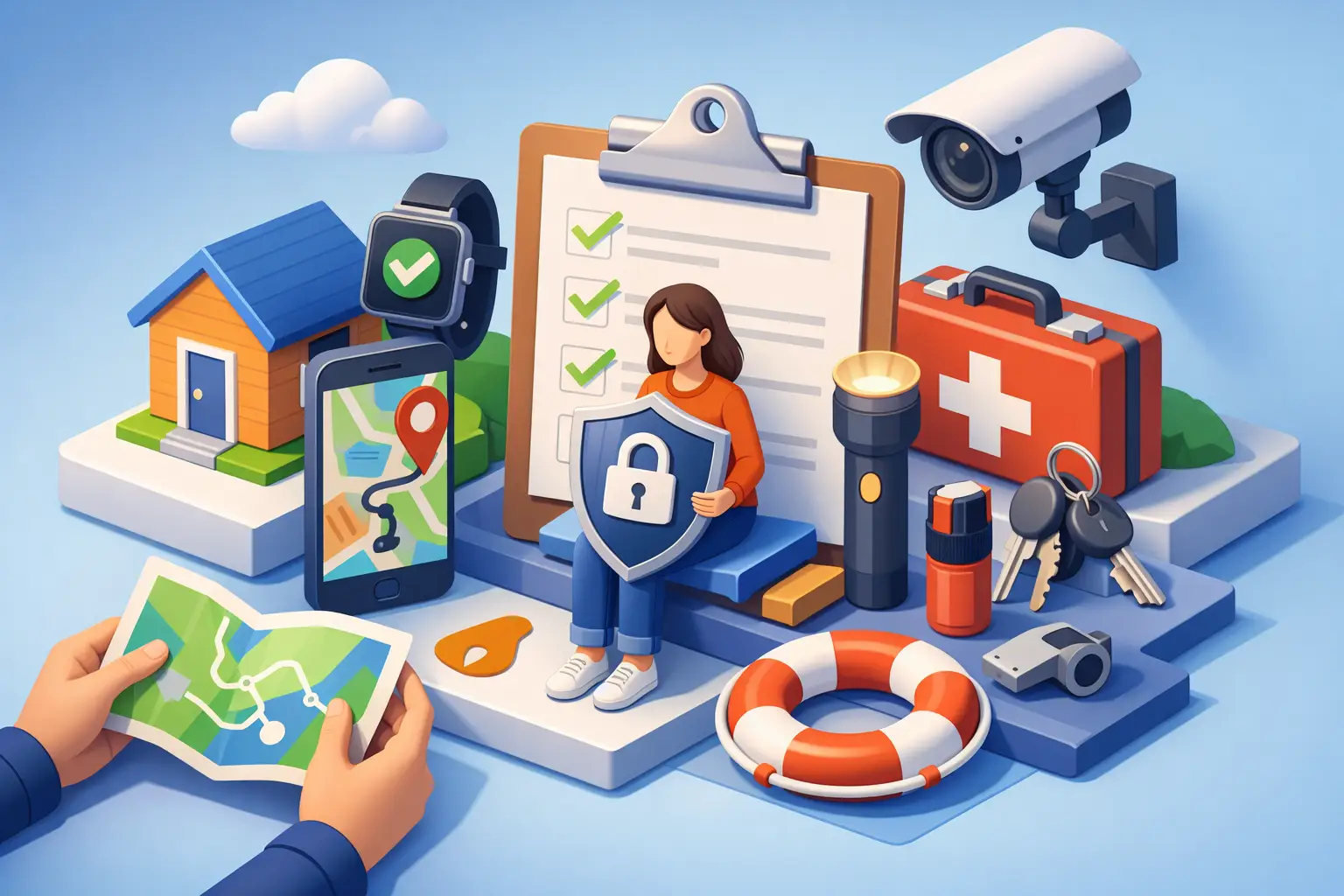
A personal safety plan should not make you feel as though you have to live on high alert. It is simply a few choices, contacts and practical arrangements that can make a difficult moment less confusing. This guide to personal safety planning is for disabled people who want support that works around real life: fluctuating health, reliance on other people, limited energy, accessible transport, communication needs and the right to be treated with respect.
Safety means different things to different people. For one person, it may mean feeling secure when a support worker visits. For another, it could be getting home after an appointment, dealing with unwanted messages, or recognising when a relationship has become controlling. You do not need to have experienced a crisis to make a plan. Planning early can give you more options later.
Start with what safety means in your life
A useful plan is personal, not copied from someone else’s checklist. Begin by thinking about the situations that leave you feeling uneasy, vulnerable or unable to make a decision as easily as you normally would. This is not about blaming yourself for risk. The responsibility for harmful behaviour always lies with the person causing harm.
You might notice that you feel less safe when your medication makes you drowsy, when you are alone after dark, when your phone battery is low, or when someone insists on speaking for you. You may depend on a carer, partner, family member or neighbour for practical help. That dependence can make it harder to set boundaries, particularly if you worry about losing care, housing, money or companionship.
Write down a few questions in whatever format suits you: a notebook, phone note, voice recording, large-print sheet or message to yourself. When do I feel most at ease? What tends to make me feel unsafe? Who takes me seriously? What help do I need to leave, rest, communicate or get somewhere safe?
The answers are the beginning of your plan. They do not need to be perfect.
Guide to personal safety planning: build a plan you can use
The best safety plan is one you can remember and manage on a bad day, not one that looks impressive on paper. Keep it short enough to use when you are tired, distressed, in pain or overwhelmed.
Choose people you can contact
Pick two or three people who are likely to respond with care rather than judgement. They could be a friend, relative, neighbour, colleague, support worker, advocate or someone in an online community you trust. It helps if they know what you mean when you say you need help.
Agree a simple phrase or emoji that lets them know something is wrong without requiring you to explain everything. For example, you might say, “Can you check the blue folder for me?” to mean, “Please call me,” or use a specific symbol to mean, “Call the police.” Only use a code that is easy for you to recall and unlikely to be guessed by someone monitoring your communications.
Ask practical questions in advance. Can they collect you if accessible transport falls through? Could they hold a spare key, copy of vital information or emergency medication list if that is appropriate? Would they be able to speak clearly to emergency services about your communication needs?
Keep essential information easy to find
If you needed help quickly, what would someone need to know? A small card, phone note or printed page can include your full name, address, NHS number if you choose, medical conditions, allergies, medication, mobility or sensory needs, and the contact details of people who should be called.
You might also include details about your communication preferences. For instance, you may need someone to speak slowly, allow processing time, use text rather than phone calls, avoid touching mobility equipment, or make sure an assistance dog can stay with you. These are not extra demands. They are information that can help others support you properly.
Keep a version somewhere private but accessible. If privacy is a concern, avoid labelling it “safety plan” and consider whether paper, a password-protected note or a trusted person holding a copy is safest for your circumstances.
Plan for your home and day-to-day support
Home should feel like a place where you can rest. If you live alone, small changes may help: keeping a charged phone within reach, using a door chain or viewer where suitable, arranging a check-in with someone after appointments, and making sure mobility aids, medication, water and keys are within reach overnight.
If you receive care or support at home, you have a right to dignity and to be listened to. Keep a record of visit times, names and anything that worries you. If a worker makes you uncomfortable, crosses boundaries, mishandles money, pressures you, neglects your needs or speaks to you in a degrading way, tell the care provider, local authority adult social care team, or someone you trust. You do not have to wait until you can prove everything before raising a concern.
There can be a difficult trade-off here. Reporting poor support may feel frightening if you rely on that support. If possible, speak to an advocate, a trusted professional or another safe person first, so you can think through what you need to stay supported while concerns are addressed.
Make travel plans that allow for real life
Travelling can become stressful quickly when access arrangements fail, pain increases or a journey changes without warning. Before you go out, make sure your phone is charged and take a charger or power bank if you can. Tell someone where you are going and when you expect to be back, especially if you are meeting a new person or travelling somewhere unfamiliar.
Consider a back-up plan for the parts that are most likely to go wrong. That might mean keeping enough money for an accessible taxi, having your route written down, saving key numbers, or knowing where you can wait safely if you need a break. If you use taxis or private hire vehicles, check the vehicle and driver details before getting in where possible.
You are allowed to change your mind. You do not owe anyone a journey, visit or meeting because plans were made earlier. If something feels wrong, getting to a busy, staffed place and contacting a trusted person can be the right next step.
Protect your privacy online
Online spaces can be a lifeline when you are isolated, but they can also be used by people who want access to your time, information or money. Be cautious with anyone who quickly pushes for private messages, photos, financial help, your address, benefit details or passwords. Pressure, guilt and exaggerated affection can all be warning signs, especially when someone says you must keep the relationship secret.
Review who can see your posts, location and friends list. Use different strong passwords for important accounts and turn on two-step verification where available. If somebody is harassing or threatening you, save evidence if it is safe to do so, then block and report them. Do not feel obliged to keep replying in order to be polite.
If a partner, relative or carer knows your passwords or checks your devices, changing settings suddenly could increase risk. In that situation, use a safer device if one is available, seek advice privately and make changes at a pace that keeps you safe.
Notice harmful behaviour without minimising it
Personal safety planning is not only about strangers. Harm can come from people we know, love, depend on or live with. Abuse may involve threats, insults, isolation, controlling access to medication, care, money, mobility aids, food, transport or communication. It may also involve someone telling you that nobody else will believe you because you are disabled.
That is not care. Needing support does not mean you have to accept fear, humiliation or control in return.
If you are worried about a relationship, avoid announcing plans to leave if you think that could put you at greater risk. Focus instead on private, practical steps: keeping essential documents where you can reach them, identifying somewhere you could go, and speaking confidentially with a specialist service or trusted professional. Your plan may need to account for care needs, children, pets, equipment and accessible accommodation. That makes planning more complex, but it does not make you trapped.
Know when to get urgent help
If you are in immediate danger, call 999. If speaking is difficult or unsafe, make the call if you can; on a mobile, you may be prompted to press 55 so the call can be treated as an emergency. If you are deaf, hard of hearing or have a speech impairment, consider registering for the UK emergency text service before you ever need it.
For non-emergency police matters, 101 may be appropriate. If you are concerned that an adult with care and support needs is being abused or neglected, you can contact your local authority adult social care team and ask for safeguarding advice. If you are unsure whether something “counts”, talk it through. You deserve a response that takes your concerns seriously.
A plan is not a test of how independent you are. It is permission to ask for help early, set boundaries clearly and make choices that protect your peace. Start with one small action today - save one trusted contact, charge your phone, or write down what support helps you feel safe. Real talk for real people means you do not have to work it all out alone.