
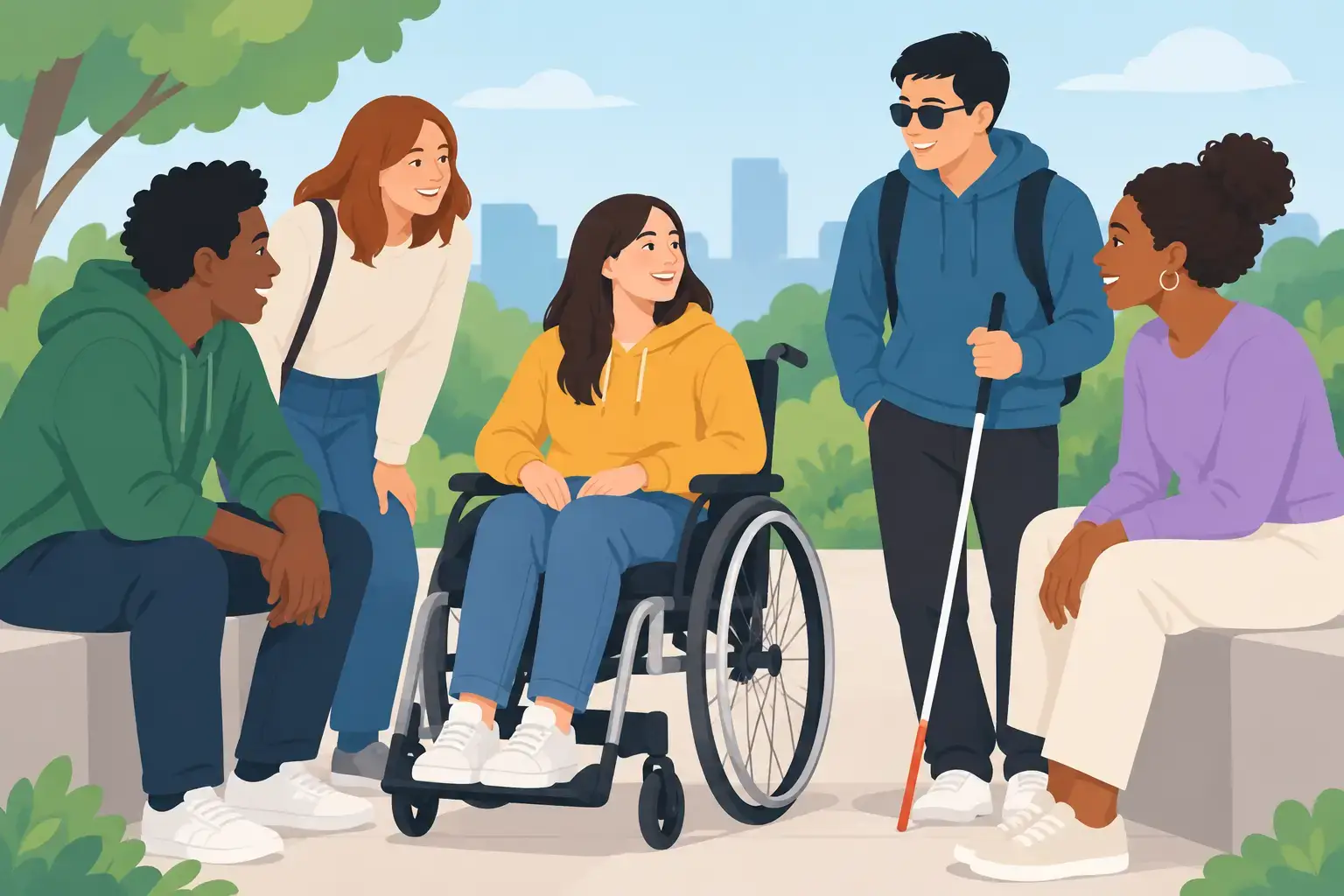
Feeling lonely while managing a health condition or disability can be exhausting, particularly when the people around you do not quite get it. Learning how to find disabled friends is not about putting people into a box or only talking about disability. It is about finding people who may understand the extra planning, the bad health days, the benefits paperwork, the access barriers, or the relief of not having to explain yourself from scratch.
Friendship is not a service you apply for, and it rarely appears instantly. But there are realistic ways to meet people while protecting your energy, your privacy and your confidence.
Start with the kind of friendship you want
Before joining every group you can find, think about what would make a friendship feel good for you. You may want someone to message when you are awake at 2am with pain or worry. You might prefer a local friend for a coffee, an accessible activity or a quiet visit at home. Or perhaps you want people who share an interest, not necessarily the same diagnosis.
There is no rule that disabled friends must have the same condition as you. Someone with a different disability may still understand pacing, inaccessible venues, fluctuating symptoms, medical appointments or the pressure to appear "fine". Equally, some people will not want disability to be the main topic at all. Both are valid.
Being clear about your own needs helps you choose spaces that suit you. If crowds worsen your symptoms, a large in-person social group might not be the best first step. An online discussion, a smaller meet-up or a phone call could be far more manageable.
How to find disabled friends online
Online spaces can make friendship more possible when travel, fatigue, anxiety, caring responsibilities or access needs make regular meet-ups difficult. They also let you take part at your own pace. You can read along before posting, leave when you need to rest, and reply on a better day.
Look for disability-led communities with active moderation and clear rules about respect. General disability groups can be a useful place to meet people with a wide range of experiences, while condition-specific groups can help when you want to discuss something more particular. You may also find communities around chronic illness, neurodiversity, sensory impairment, mobility, mental health, independent living or disability rights.
Do not feel pressured to share your full story straight away. A simple introduction works well: mention an interest, say roughly where you are based if you are comfortable doing so, and explain what sort of connection you are looking for. For example, you could say that you enjoy crime dramas, gaming, crafts or football and would like to chat with others who understand life with fluctuating health.
The best conversations usually start with something specific. Rather than posting, "I need friends", try responding to a discussion you genuinely relate to or asking a question about a shared interest. It gives the other person an easy way in, without either of you feeling put on the spot.
Talking Really’s community conversations, live sessions and phone-ins can also be a gentler way to hear from people with lived experience before deciding whether you want to join in yourself.
Let conversations build naturally
Not every friendly exchange becomes a close friendship, and that is normal. Start small. Comment a few times, swap messages about a shared topic, or arrange a short call if it feels right. Trust is built through consistency, not through sharing everything in one conversation.
It is also okay if someone does not reply, disappears for a while or cannot maintain regular contact. Disabled people often deal with changing health, hospital appointments, brain fog, limited energy and difficult periods. Try not to assume it is personal, while still noticing whether the effort feels one-sided over time.
Find connection through interests, not just disability
Disability communities can be a brilliant starting point, but you do not have to limit yourself to disability-focused spaces. Shared interests often take the pressure off. A book group, accessible gardening project, craft circle, gaming community, local history group, choir, online course or gentle exercise session can lead to friendship because you already have something to talk about.
When looking locally, contact organisers beforehand if you need to ask about access. You can ask whether there are step-free entrances, accessible toilets, seating, quieter areas, a hearing loop, parking nearby or the option to join remotely. Their response tells you something useful. A group does not have to get everything perfect, but it should treat access questions as ordinary and reasonable.
Many local areas also have disability organisations, centres for independent living, peer-support groups and charities that run social activities. Some are aimed at a particular impairment or age group, while others welcome anyone who identifies as disabled or has a long-term condition. It depends on what feels most comfortable.
If an organised group sounds daunting, ask whether you can attend once just to see how it feels. You do not owe anyone a long-term commitment. Leaving early, bringing someone you trust, or deciding it is not for you are all completely acceptable.
Make the first move without forcing it
A lot of adults are lonely, disabled or not, and many would welcome someone making the first move. The trick is to keep it low-pressure and specific.
After a good conversation, you might say: “I’ve enjoyed talking to you about this. Would you like to swap messages sometimes?” If you live near each other, you could suggest a short, accessible meet-up rather than a whole day out. A coffee, a park bench with takeaway drinks, an hour at a library, or an online film night can be easier than an expensive or tiring plan.
Be honest about practical needs early enough to make plans work. You do not need to apologise for needing to cancel, rest, bring medication, choose an accessible venue or keep the visit short. A good friend will not make you feel difficult for having a body or mind that needs consideration.
At the same time, try not to carry all the organising. Friendship should make room for your needs, but it should also include mutual interest and care. Notice who checks in, remembers what matters to you and respects your boundaries.
Put safety before politeness
Most people you meet will be genuine, but it is sensible to take your time, especially online. Do not share your address, financial details, benefit information, passwords or copies of official documents. Be wary of anyone who quickly asks for money, pushes you to move a conversation somewhere private, wants to know exactly when you are alone, or makes you feel guilty for saying no.
For a first in-person meeting, choose a public place you can get to and leave easily. Tell somebody you trust where you are going, arrange your own transport if possible, and keep the first meet-up short. If a person reacts badly to these basic precautions, that is a reason to step back.
Safety includes emotional safety too. You deserve friendships where you are believed and respected, not relationships where someone constantly compares conditions, dismisses your experience or treats you as a project to fix.
Give yourself permission to try again
Finding your people can take time, especially if illness, anxiety or past experiences have knocked your confidence. One group may be too noisy, one chat may fizzle out, and one meet-up may leave you drained. That does not mean friendship is not for you. It means that particular route or person was not the right fit.
Set a pace you can sustain. Perhaps you comment in one community this week, attend one online session next month, or message one person whose posts make you smile. Small, repeatable steps are more useful than pushing yourself into a situation that costs days of recovery.
The right friendships do not require you to minimise your disability, perform gratitude or be available all the time. They leave space for ordinary chat, difficult days, shared laughs and the quiet comfort of being understood. Start where you are, take the pressure off, and let connection grow at a pace that respects your life.