
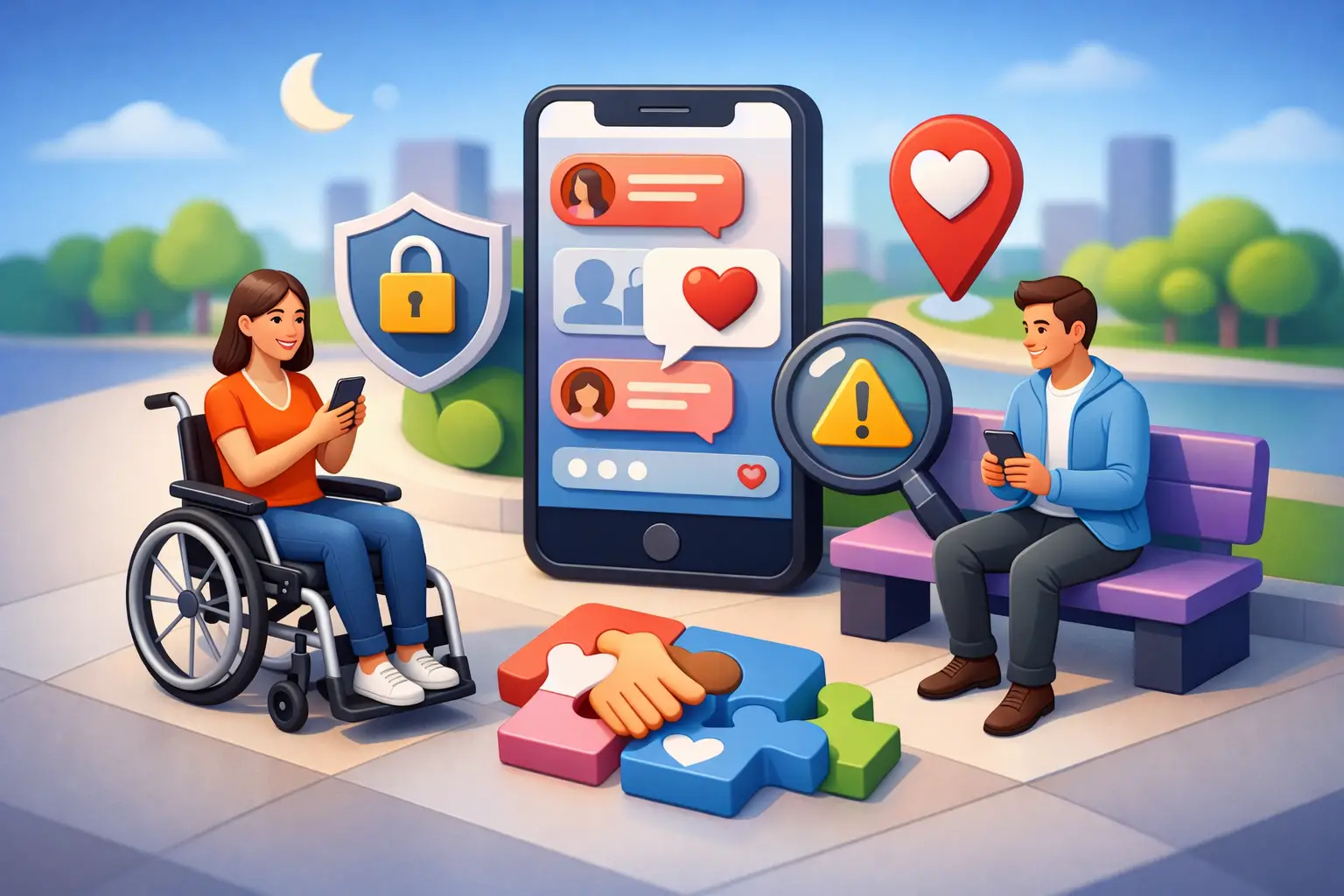
Dating can be exciting, awkward, hopeful and nerve-racking all at once. Add disability, care needs, fatigue, inaccessible venues or past experiences of being judged, and it can feel like there is even more to weigh up. If you searched for how to stay safe dating disabled, the answer is not to make yourself smaller or give up on connection. It is to date on terms that protect your safety, comfort and right to be treated well.
You deserve romance, companionship and a good time without having to ignore the gut feeling that something is off. Being careful is not being negative. It is giving yourself room to get to know someone properly.
How to stay safe when dating as a disabled person
Safety starts before a first date. Whether you meet someone through an app, social media, a disability community or mutual friends, take your time. A person who is genuinely interested will not punish you for moving at a pace that works for you.
It can be tempting to share a lot quickly when somebody seems understanding about your condition or makes you feel seen. That is especially true if loneliness has been a heavy part of life. But early kindness is not the same thing as trust. Trust is built by someone being consistent, respectful and patient over time.
Keep your full address, daily routine, financial details and official information private until you know the person well. You do not need to tell a new match where you receive treatment, which benefits you claim, what equipment you have at home or when your support worker visits. These are personal details, not proof that you are being open or serious.
If you use dating apps, consider using photos that do not reveal your exact location. Check what is visible in the background before posting, especially house numbers, street signs, medical letters or workplace details. It is also wise to keep conversations on the app at first, rather than immediately giving out your mobile number or moving to a private messaging service.
You choose what to disclose, and when
There is no single right time to tell someone about your disability. Some people prefer to be upfront in a profile because it filters out people who are not a good fit. Others wait until a conversation feels more established. Both approaches are valid.
What matters is that the decision is yours. You do not owe strangers your diagnosis, trauma history or a full explanation of how your body works. You can be clear without sharing everything: “I have some access needs, so I like to plan dates in advance” is enough for an early conversation.
Pay attention to their response. Curiosity can be kind, but interrogation is not. A decent person might ask what would make a date easier. They will not demand medical details, question whether you are “really disabled”, make you prove your limits, or turn your disability into a fascination.
Plan the first meeting around your needs
A first date does not have to be expensive, energetic or complicated. The point is to see how you feel around each other. Choose a public place you know, ideally during the day or early evening, and make sure it is genuinely accessible for you.
That may mean checking step-free access, accessible toilets, seating, lighting, noise levels, parking, nearby public transport or whether the venue can accommodate a mobility aid. If you have sensory sensitivities, a quiet café at an off-peak time may be far better than a crowded bar. If fatigue or pain is an issue, choose somewhere you can leave easily after an hour.
Their reaction to these practical details can tell you a lot. Somebody who says, “No problem, let’s find somewhere that works,” is showing consideration. Somebody who complains that your access needs are inconvenient, pressures you to go somewhere unsuitable, or expects you to struggle through is giving you useful information too.
Before you leave, make a simple safety plan:
- Tell a trusted person who you are meeting, where you will be and when you expect to be home.
- Arrange a check-in by text or phone, including a code word if you want an easy way to signal that you need help.
- Travel independently where possible, so you are not relying on a new date for a lift home.
- Keep your phone charged and carry any medication, mobility equipment or essentials you may need.
Independence will look different for everyone. You may rely on a personal assistant, accessible taxi, family member or support worker, and there is no shame in that. The goal is not to prove you can do everything alone. The goal is to make sure a new person cannot control whether you can get home, access medication or contact support.
Do not let “help” become control
Many disabled people are used to accepting help in daily life. Most help is offered with good intentions, but a dating partner should never use support as a way to gain power over you.
Be cautious if someone insists on managing your money, medication, appointments, transport or communication very early on. The same applies if they try to isolate you from friends, family, online communities or professionals who know you well. Controlling behaviour can be dressed up as care: “I just worry about you”, “You cannot manage without me”, or “Your family does not understand you like I do.”
A caring partner respects your choices. They ask before helping, accept no as an answer, and understand that you remain the expert on your own body and life. Needing support does not mean someone else gets to make your decisions.
Notice red flags without blaming yourself
There is no perfect way to spot a bad person immediately. Some people are charming at first, and anyone can be taken in by attention that feels warm or reassuring. If a relationship changes over time, that is not your fault.
Still, certain behaviours deserve attention. Watch for someone who pushes for fast commitment, becomes angry when you set boundaries, repeatedly cancels plans but expects you to be available, or makes cruel jokes about your disability and then calls you “too sensitive”. Be wary if they ask to borrow money, want access to your benefits, pressure you to sign documents, or suggest that you keep the relationship secret.
Sexual safety matters too. Consent must be freely given every time, regardless of whether you are in a relationship, whether someone has paid for a meal, or whether they have helped with transport or care. Pain, fatigue, medication, communication differences and trauma can all affect what feels safe or possible. A respectful partner will listen, check in and stop immediately when asked.
If you communicate non-verbally, use assistive technology, or find it hard to process information under pressure, consider how you can make boundaries clear before meeting. That might mean writing a message beforehand, bringing a communication aid, or arranging shorter dates where you are less likely to feel overwhelmed. You never need to push through discomfort to avoid disappointing someone.
If something feels wrong, you can leave
You do not need evidence, a dramatic reason or another person’s permission to end a date. “I need to go now” is enough. You can leave because you are tired, because the venue is wrong, because they ignored a boundary, or simply because the feeling has changed.
If you feel in immediate danger, call 999. If speaking is difficult, tell the call handler what you can, including your location. For situations that are worrying but not an emergency, you can contact the police on 101. If you think you may be experiencing abuse, a trusted friend, support worker, GP, local domestic abuse service or advocacy organisation can help you think through safe next steps.
Save messages, screenshots and dates if somebody is harassing, threatening or financially exploiting you. You may not want to report it straight away, and that is your choice, but keeping a record can be helpful later. Block them where you can, review privacy settings, and let people around you know what is happening so you are not carrying it alone.
Let good people earn your trust
Dating safely is not about assuming every person has bad intentions. It is about giving yourself enough time to see whether their actions match their words. The right person will not rush your disclosure, resent your access needs or make you feel grateful for basic decency.
A healthy relationship should leave room for your friendships, routines, healthcare, rest and independence. It should feel calmer over time, not more confusing. You are allowed to want someone who sees your disability as part of your life, not a problem to solve, a weakness to exploit or the only thing worth noticing.
If dating has left you feeling unsure, talk it through with someone you trust. Real talk with people who understand can make a confusing situation clearer. Take the next step at your pace - safe dating is not about closing the door on connection, but making sure the people you let in treat you with the respect you have always deserved.