
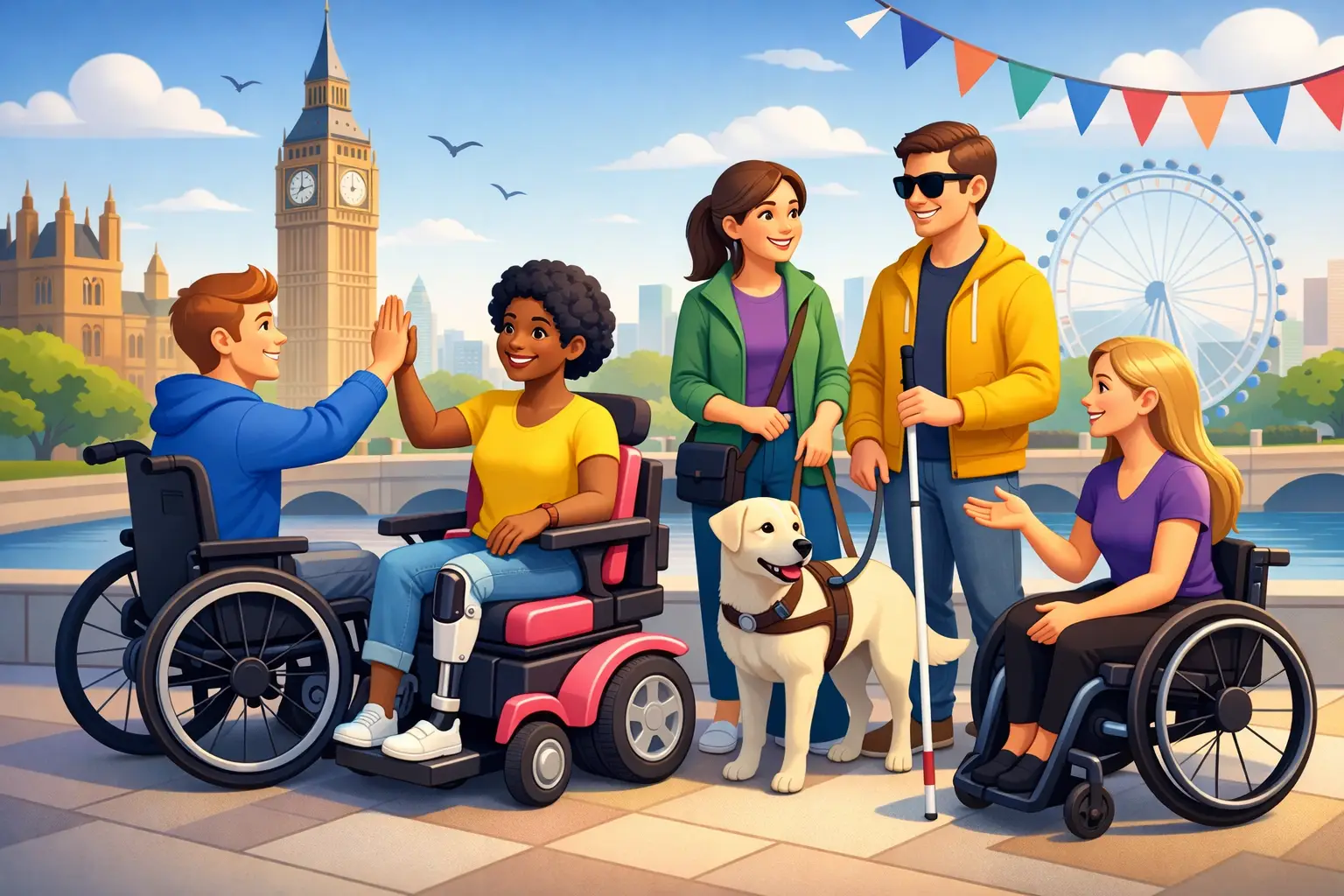
A cancelled plan can feel bigger when it is the third one this month, transport has been difficult, your energy has disappeared, or you are simply tired of explaining your condition before anyone gets to know you. The best ways to meet disabled friends are not about forcing yourself into busy rooms or pretending access needs do not matter. They are about finding spaces where you can arrive as yourself, set the pace, and meet people who understand that friendship sometimes includes changed plans, quiet days and practical support.
Social isolation is common, but it is not something you have to quietly accept. There are real routes to connection across the UK, whether you prefer chatting from home, meeting locally, sharing an interest, or speaking to someone who already gets the disability side of life.
Start with the kind of friendship you want
Before joining every group you can find, think about what would make friendship feel good and manageable for you. You may be looking for someone to message during difficult weeks, a local friend for coffee, a gaming mate, a walking or wheelchair-friendly exercise buddy, or people who understand benefits appointments and health worries without needing a full explanation.
There is no wrong answer. Knowing what you want simply helps you choose spaces that suit your life. If travelling is hard, an online community may be the most realistic starting point. If you miss getting out, a nearby peer group with a predictable meeting place may be more useful than a large national forum.
It also helps to be honest about your capacity. A friendship does not need daily messages or long outings to be meaningful. A fortnightly phone call, an online quiz night or a brief check-in after an appointment can be a solid beginning.
Join disability-led peer groups, not just services
Local disability organisations, condition-specific charities and independent living groups often run peer support sessions, social meet-ups and online gatherings. These can be a gentler place to start than a general social club because access, fatigue, mobility aids and fluctuating health are more likely to be understood.
Look for groups that describe themselves as peer-led or community-led. A peer group is not the same as a formal support service. People may share useful advice, but the point is mutual connection rather than being assessed, fixed or spoken down to.
Your local council website, library noticeboard, community centre and NHS social prescribing team can all be starting points. If you already have contact with an occupational therapist, social worker, housing support worker or advice service, ask whether they know of accessible local groups. They may know about smaller meet-ups that are not well advertised online.
Do check the practical details before committing. Ask where the toilets are, whether there is step-free access, how noisy the space tends to be, whether there is a quiet area, and if carers or support workers can attend. A welcoming group should not make you feel awkward for asking.
Try online communities with clear boundaries
Online friendship can be every bit as real as friendship that starts over a cup of tea. For many disabled people, it also removes major barriers: transport costs, inaccessible venues, pain, anxiety, caring responsibilities and the pressure of looking well enough to go out.
A good online community gives you time to read the room before posting. Start small. You might reply to a discussion about an interest you share, ask a practical question, or join a live chat without feeling you have to reveal personal details straight away. Regular conversation is often how trust builds.
Community spaces such as Talking Really can be useful for this because they combine straightforward disability conversations with phone-ins, videos and discussions where lived experience is valued. You do not need to have the perfect words. A simple, “I have been feeling isolated too - does anyone fancy a chat about this?” can open a door.
Be selective, though. Not every disability group is supportive, and a large group can sometimes become overwhelming or full of conflicting advice. Leave spaces that make you feel judged, pressured or frightened. You are allowed to mute notifications, take breaks and choose a smaller community.
Meet people through shared interests
Disability is part of life, but it does not have to be the only thing you have in common with a friend. Interest-based groups can create a more natural starting point because the conversation already has somewhere to go.
Think beyond activities that demand lots of energy or money. Book clubs, craft circles, local history talks, accessible gardening projects, tabletop games, film discussion groups and online gaming communities can all work. Some people connect through adapted sport or gentle exercise, while others would rather bond over music, pets, cooking or a television programme.
If you are nervous, choose a one-off event first. It is easier to say yes to trying something once than to promise yourself you will attend every week. If it goes well, return. Familiarity matters. Seeing the same faces several times is usually a better route to friendship than trying to make a deep connection in one conversation.
Ask organisers about adjustments in advance rather than assuming an activity is not for you. Plenty of groups can offer seating, breaks, remote attendance or a quieter role if they know what would help.
Make the first move in a low-pressure way
Many people are waiting for someone else to start the conversation. After a group session or an enjoyable online exchange, try a small, specific invitation. “I enjoyed talking about that programme. Would you like to swap messages?” feels easier to answer than “Do you want to be friends?”
For an in-person meet-up, suggest something with an easy exit and little pressure, such as a coffee near an accessible station, a library visit or a short video call. State your needs plainly if you need to. For example: “I can usually manage an hour, but I may need to cancel if my pain flares.” The right person will treat that as normal information, not an inconvenience.
It can feel vulnerable to mention a cancellation policy so early. But it prevents resentment and gives the other person permission to be honest about their own health and energy too. Friendship works better when neither person has to hide the reality of their life.
Keep safety part of the plan
Most people you meet will be genuine, but disabled people can be targeted by people who want money, personal information, control or emotional dependence. Being open to friendship does not mean ignoring your instincts.
When moving from an online conversation to meeting, keep a few sensible boundaries in place:
- Meet somewhere public and accessible for the first time, preferably in daytime.
- Tell someone you trust where you are going and when you expect to be home.
- Do not share your address, benefit details, bank information or private documents early on.
- Be wary of anyone who becomes intense quickly, asks for money, or tries to isolate you from others.
A decent new friend will not take these precautions personally. They will understand that safety is especially important when you may rely on accessible transport, personal assistance or predictable routines.
Let friendships grow at a pace that works
The best ways to meet disabled friends are often the least dramatic. A comment becomes a message. A message becomes a regular call. A regular call becomes someone who checks how your assessment went, sends a silly photo on a bad day, or understands why you cannot make it out this week.
Not every connection will turn into a close friendship, and that is all right. Some people will be friendly acquaintances, while others may only fit one part of your life. Give yourself permission to try again if a group is not for you or a conversation goes nowhere. That is not a failure. It is simply how people find their people.
You deserve friendships where access needs are not an apology, where your boundaries are respected, and where you can be more than the difficult day you are having. Start with one manageable step - one group, one comment, one invitation - and let connection build in its own time.